Serve and Protect? Not if Your Loved One’s Black and Missing
Share
Explore Our Galleries









Breaking News!
Today's news and culture by Black and other reporters in the Black and mainstream media.
Ways to Support ABHM?
by Trina Reynolds-Tyler, Invisible Institute, and Sarah Conway, City Bureau
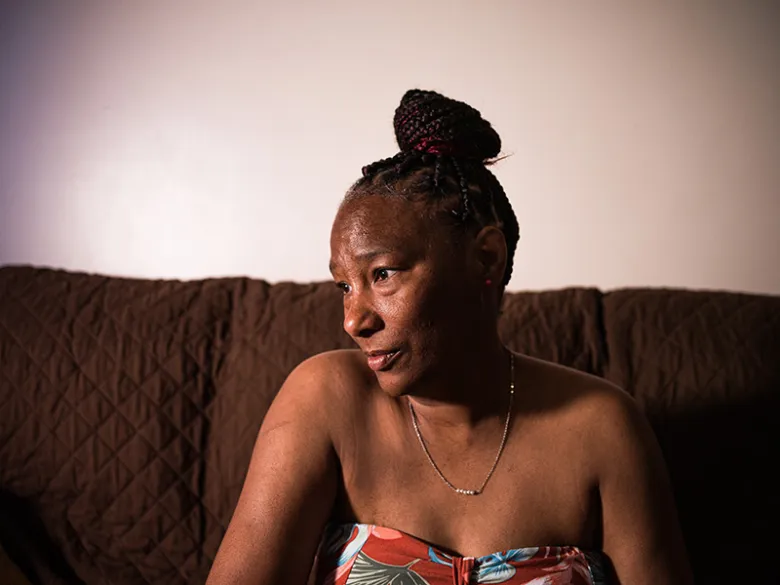
When Latonya Moore got home from the police station just before sunrise on May 29 after reporting her daughter Shantieya Smith missing, she was exhausted but unable to sleep. She worried that police didn’t take her report seriously.
“Police weren’t doing what they were supposed to do, so I had to do it on my own,” she says.
She immediately organized a search with family members and friends. They put up fliers in gas stations and stores in the neighborhood and drove around, talking to as many people as they could.
[…]
Meanwhile, Moore wondered why police hadn’t come by to ask her any questions or collect any evidence. She had told officers that Smith had left her phone at home, but days after filing the report, officers still hadn’t picked it up. Desperate for clues, Moore browsed her daughter’s recent calls and text messages — even exchanging several messages and calls with a man who Moore, to this day, believes to be her daughter’s murderer.
On June 4, Moore held a press conference in front of the same police station where she had first reported her daughter missing. With the Rev. Robin Hood by her side, she questioned why police hadn’t made an effort to look for her daughter.
“I’m praying she’s okay,” Moore told WGN 9 News. “I don’t want to think the worst, though.”
Downplaying the case, then-Police Superintendent Eddie Johnson hosted his own press conference 10 days later. “The two young ladies we are speaking about were involved in narcotics sales, prostitution, using narcotics together,” Johnson said, referring to Davis and Smith. Moore says her daughter did not use drugs. City Bureau and the Invisible Institute could not independently verify a connection between Smith and Davis outside of the person with whom they were last seen. The medical examiner later said Smith had no illegal drugs in her body.
Reynolds-Tyler and Conway interviewed nine Black families about their similar experiences with the police when loved ones were missing.
Minnesota opened a task force to investigate cases like this.
More breaking news here.
Comments Are Welcome
Note: We moderate submissions in order to create a space for meaningful dialogue, a space where museum visitors – adults and youth –– can exchange informed, thoughtful, and relevant comments that add value to our exhibits.
Racial slurs, personal attacks, obscenity, profanity, and SHOUTING do not meet the above standard. Such comments are posted in the exhibit Hateful Speech. Commercial promotions, impersonations, and incoherent comments likewise fail to meet our goals, so will not be posted. Submissions longer than 120 words will be shortened.
See our full Comments Policy here.