Room4Debate: Are rising obesity costs the new second-hand smoke?
Share
Explore Our Galleries









Breaking News!
Today's news and culture by Black and other reporters in the Black and mainstream media.
Ways to Support ABHM?
by Caryn Freeman, The Grio
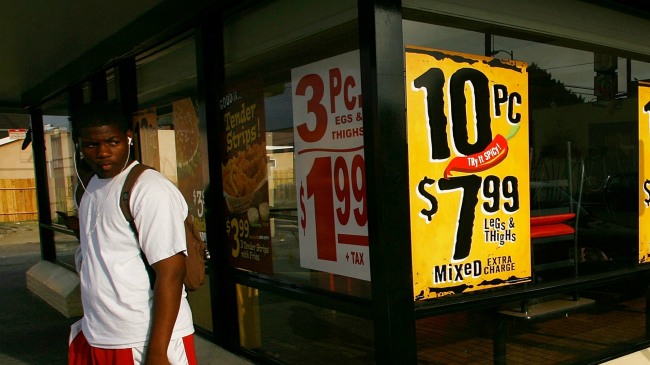
The growing obesity epidemic is impacting Americans in ways they may not yet be aware of. The costs associated with taking care of the transportation, health and safety of America’s consistently growing obese population are all being passed on to taxpayers. A new substructure to accommodate obese Americans in public places is yet another costly expense. Because these costs are not reported as much as the impact of obesity on health care, some Americans aren’t fully aware of the financial burden they are bearing.
Reuters reports that there are already costly overhauls taking place in hospitals and within the public transposition sector. “U.S. hospitals are ripping out wall-mounted toilets and replacing them with floor models to better support obese patients. The Federal Transit Administration wants buses to be tested for the impact of heavier riders on steering and braking. In addition to those expenditures, it’s been revealed that, “cars are burning nearly a billion gallons of gasoline more a year than if passengers weighed what they did in 1960.”
Some are comparing the startling cost of the obesity epidemic to costs associated with smoking related illnesses. It wasn’t until Americans became aware of the damage cigarette smoking had on one’s health and until the public and legislators became aware of the devastating impact of second hand smoke. Eventually, Congress passed legislation to restrict smoking in public facilities.
Health advocates are hoping that creating greater public awareness of the costs related to obesity will spark the same type of response.
How can Black America get healthier? What are your thoughts?
We previously asked about the motivations behind Black women’s weight.
Find similar topics here.
Comments Are Welcome
Note: We moderate submissions in order to create a space for meaningful dialogue, a space where museum visitors – adults and youth –– can exchange informed, thoughtful, and relevant comments that add value to our exhibits.
Racial slurs, personal attacks, obscenity, profanity, and SHOUTING do not meet the above standard. Such comments are posted in the exhibit Hateful Speech. Commercial promotions, impersonations, and incoherent comments likewise fail to meet our goals, so will not be posted. Submissions longer than 120 words will be shortened.
See our full Comments Policy here.