Rebuilding Tulsa With or Without Reparations
Share
Explore Our Galleries









Breaking News!
Today's news and culture by Black and other reporters in the Black and mainstream media.
Ways to Support ABHM?
By Anneliese Burner, Yes Magazine
The Historic Greenwood District of Tulsa, Oklahoma, has catapulted to international fame in recent years as more people have become aware of events that took place in 1921, when a white mob, motivated by economic avarice and anti-Black animus, stormed through America’s best-known Black Wall Street like troops destroying a town of enemy combatants. Retrospectives exploring the events, the causes, and the immediate sequelae abound, but the hopes and dreams that will help shape what Greenwood’s and North Tulsa’s future holds beyond the persistent evocation of the terrible events of June 1, 1921, are less broadly examined.
There may not be a clearer case for reparations to compensate Black people for white violence and theft than the destruction of Tulsa’s Greenwood District. Yet, reparations have remained elusive. In their absence, the descendants of survivors and victims find ways to persevere and build beyond the loss.
Tulsa’s current residents—long-term or new—and others outside the city who recognize the urgency of preserving Greenwood’s legacy, are also working in myriad ways that will help chart the Magic City’s path forward. Artifacts from Tulsa’s timeline are being excavated, explored, and expanded through art, literature, film, and more as testimony to the past and paeans to the future.
[…]
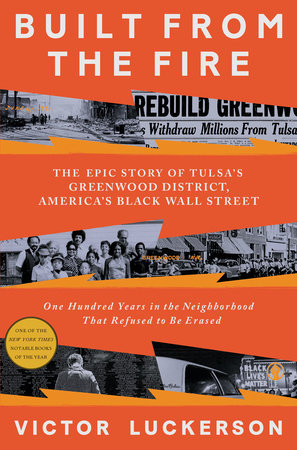
In his book, Built From the Fire: The Epic Story of Tulsa’s Greenwood District, America’s Black Wall Street, Tulsa-based journalist and author Victor Luckerson framed the telling of Tulsa’s most infamous event within the broader story of a community built from scratch that then successfully rebuilt itself in the wake of one of the largest anti-Black racial pogroms in U.S. history. “I wanted to understand what had happened in this place sort of after the Tulsa Race Massacre … I was much more interested in the entrepreneurship and community solidarity that grew in the city both before and after the destruction,” Luckerson says.
Read about the book and efforts to rebuild Greenwood.
Follow more updates on Greenwood preservation and excavation in our breaking news section.
Comments Are Welcome
Note: We moderate submissions in order to create a space for meaningful dialogue, a space where museum visitors – adults and youth –– can exchange informed, thoughtful, and relevant comments that add value to our exhibits.
Racial slurs, personal attacks, obscenity, profanity, and SHOUTING do not meet the above standard. Such comments are posted in the exhibit Hateful Speech. Commercial promotions, impersonations, and incoherent comments likewise fail to meet our goals, so will not be posted. Submissions longer than 120 words will be shortened.
See our full Comments Policy here.