Pharoah Sanders, influential jazz saxophonist, dies at 81
Share
Explore Our Galleries









Breaking News!
Today's news and culture by Black and other reporters in the Black and mainstream media.
Ways to Support ABHM?
By The Associated Press
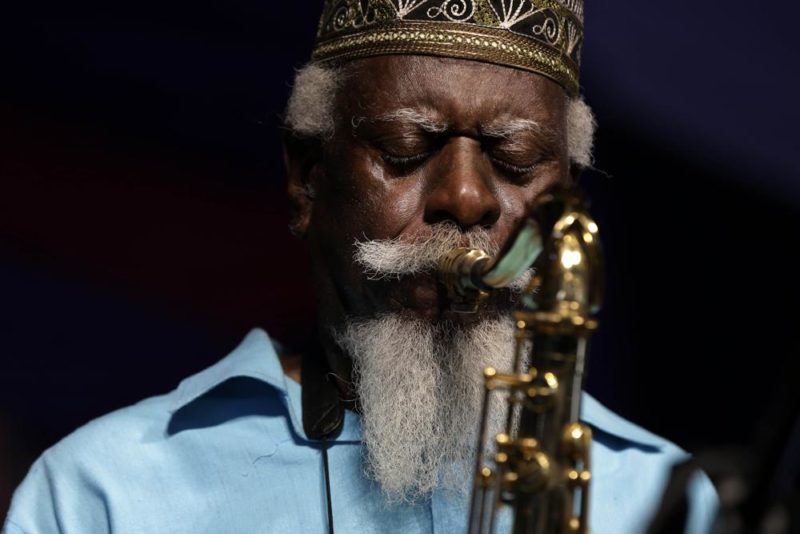
Pharoah Sanders, the influential tenor saxophonist revered in the jazz world for the spirituality of his work, has died, his record label announced. He was 81.
Sanders, who launched his career playing alongside John Coltrane in the 1960s, died in Los Angeles early Saturday, said the tweet from Luaka Bop, the label that released his 2021 album, “Promises.” It did not specify a cause. A phone message to Luaka Bop in New York was not immediately returned.
“We are devastated to share that Pharoah Sanders has passed away. He died peacefully surrounded by loving family and friends in Los Angeles earlier this morning. Always and forever the most beautiful human being, may he rest in peace,” said the label’s message on Twitter, accompanied by a heart emoji.
Among the saxophonist’s best-known works was his two-part “The Creator Has a Master Plan,” from the “Karma” album released in 1969. The combined track is nearly 33 minutes long.
Born in Little Rock, Arkansas, in 1940, Sanders began his early musical life by playing drums, then the clarinet in church. In high school, he began renting out the school saxophone. After high school he moved to Oakland, California, where he intended to attend art school. But he soon moved to New York to join the city’s avant-garde jazz scene. He hitchhiked his way across country, he told The New Yorker magazine in 2020.
Read about Sanders’ achievements.
Another jazz musician, Ramsey Lewis, recently passed.
Get more breaking Black culture news.
Comments Are Welcome
Note: We moderate submissions in order to create a space for meaningful dialogue, a space where museum visitors – adults and youth –– can exchange informed, thoughtful, and relevant comments that add value to our exhibits.
Racial slurs, personal attacks, obscenity, profanity, and SHOUTING do not meet the above standard. Such comments are posted in the exhibit Hateful Speech. Commercial promotions, impersonations, and incoherent comments likewise fail to meet our goals, so will not be posted. Submissions longer than 120 words will be shortened.
See our full Comments Policy here.