On This Day in History: The Largest Slave Revolt in US History Began, Led by Denemark Vesey
Share
Explore Our Galleries









Breaking News!
Today's news and culture by Black and other reporters in the Black and mainstream media.
Ways to Support ABHM?
From Atlantic Monthly
In 1822, in Charleston, South Carolina, Vesey masterminded what would have been the largest slave revolt in American history. When an informer revealed the plans at the last minute and the revolt was nipped in the bud, Charleston authorities downplayed the story, claiming that they had “allowed” the plot to progress so as to ensure the capture of its leaders. Fearing future attempts at insurrection, Charleston slaveowners had Vesey and many of his co-conspirators put to death, and hid written records of the Vesey episode from their slaves.
In the June, 1861, issue there appeared a detailed account of Vesey’s planned revolt and its suppression, titled “Denmark Vesey.” Its author, a frequent Atlantic contributor named Thomas Wentworth Higginson, was a Cambridge, Massachusetts, minister and a committed abolitionist.
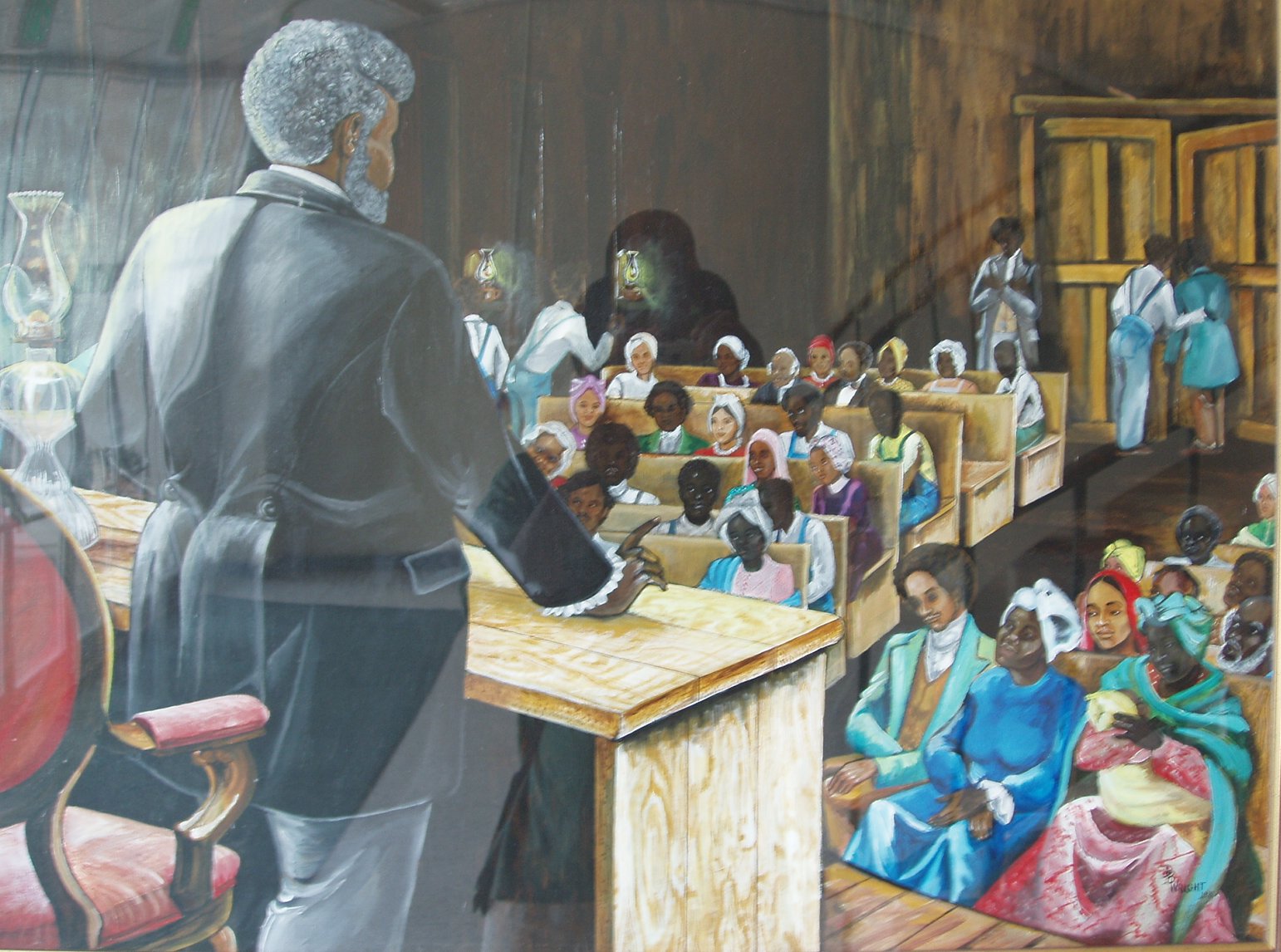
Higginson described Vesey’s plan (which was developed in collaboration with a slave named Peter Poyas) as “the most elaborate insurrectionary project ever formed by American slaves. […] In boldness of conception and thoroughness of organization there has been nothing to compare it with.” Higginson went on:
“That a conspiracy on so large a scale should have existed in embryo during four years, and in an active form for several months, and yet have been so well managed … shows extraordinary ability in the leaders, and a talent for concerted action on the part of the slaves generally with which they have hardly been credited.”
From GALE at Cengage Learning
Vesey’s example must be regarded as one of the most courageous ever to threaten the racist foundations of America. — Sterling Stuckey
Vesey’s actions were particularly courageous because by the time he planned his rebellion, he had already gained his freedom and was making a good living. But he had seen too much suffering — he hated slavery and slaveholders — and he was determined to free his people from the terrible oppression and cruelty. Like others who rose against the system, Vesey was condemned to death and hanged.
Yet his opponents could not kill his spirit. Vesey became a symbol in the struggle for freedom and an inspiration for later abolitionists, including John Brown. “Remember Denmark Vesey of Charleston!” was the battle cry of the first black regiment formed to fight in the Civil War.
To learn more, read this.
Discover what happened during the three centuries of slavery in the USA.
More stories related to the Black culture and history.
Comments Are Welcome
Note: We moderate submissions in order to create a space for meaningful dialogue, a space where museum visitors – adults and youth –– can exchange informed, thoughtful, and relevant comments that add value to our exhibits.
Racial slurs, personal attacks, obscenity, profanity, and SHOUTING do not meet the above standard. Such comments are posted in the exhibit Hateful Speech. Commercial promotions, impersonations, and incoherent comments likewise fail to meet our goals, so will not be posted. Submissions longer than 120 words will be shortened.
See our full Comments Policy here.