Nate Parker’s “The Birth of a Nation”, Hollywood Clapback or Just Another Slave Movie?
Share
Explore Our Galleries









Breaking News!
Today's news and culture by Black and other reporters in the Black and mainstream media.
Ways to Support ABHM?
By Riley Wilson and Shantrelle P. Lewis, Colorlines.com
In this point/counterpoint about Nate Parker’s buzzy directorial debut, two Black independent filmmakers wrestle with the notion of seeing more chains, whips and nooses on the big screen.
Riley Wilson: “The Birth of a Nation” Didn’t Change the Game
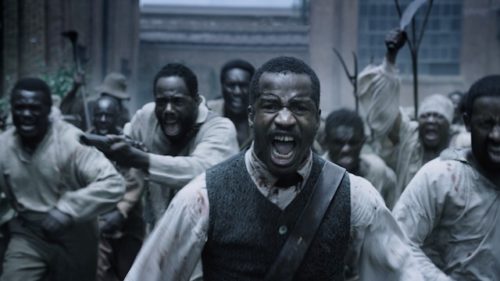
Climactic scene from Nate Parker’s “The Birth of a Nation”
…On the one hand, we have a film written, directed, and starring a Black man that tells the story of an enslaved African-American by the name of Nat Turner who led the most successful slave rebellion in U.S. history. On the other hand, we have a film about slavery-again…
…(I)f you consider the rapturous reviews of “The Birth of a Nation” and the popularity of Black Lives Matter, a film studio would be silly not to invest in such a project. Black folks fighting for their rights—let alone their lives—is so in right now…
…(T)o be quite honest, I cringe every time I see a period film about this topic gain more notoriety than films that speak to the current condition of Black lives…
…(T)here are so many other stories to tell. It’s like the only way a film about the Black experience is rewarded is if it’s about the good-ole’ days of slavery…
My qualm is not with the success that “The Birth of Nation” has had so far. It’s with the lackadaisical nature of an industry that allows so many great movies from writers and directors of color to fall through the cracks…
Shantrelle P. Lewis: Nate Parker’s “The Birth of A Nation” is the Biggest Clapback Hollywood Has Ever Seen
…(M)ost of our parents, us and our children have a limited view of history—especially any involving people of African descent. We’re taught that Black history begins with slave ships, cotton gins, beatings, lynchings and rape and ends with segregated buses, water hoses, police dogs and burning crosses. This view has been exacerbated by the predominant images of Black people today, those from the minstrel shows that are reality television programs and the viral videos showing police-sanctioned murders of Black people on social media…
Beyond what the sale of Parker’s film signifies,”The Birth of a Nation” is a brilliant clapback against the first movie to use this title, D.W. Griffith’s 1915 Ku Klux Klan propaganda film…
…Give me Nat Turner. Give me Toussaint. Give me Dessalines. Give me Nanny. Give me Zumbi. Give me Boukman. Give me Tula. Give me 1811. Give me the Saamaka. Give me Sojourner. Give me Denmark. Give me Harriet. Give me all of them on the big screen, any day, any year from now until forever.
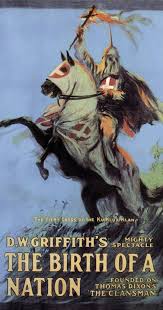
Cover from the 1915 original “The Birth of a Nation” by D.W. Griffith
Read the full article here.
Read more Breaking News here.
Comments Are Welcome
Note: We moderate submissions in order to create a space for meaningful dialogue, a space where museum visitors – adults and youth –– can exchange informed, thoughtful, and relevant comments that add value to our exhibits.
Racial slurs, personal attacks, obscenity, profanity, and SHOUTING do not meet the above standard. Such comments are posted in the exhibit Hateful Speech. Commercial promotions, impersonations, and incoherent comments likewise fail to meet our goals, so will not be posted. Submissions longer than 120 words will be shortened.
See our full Comments Policy here.