NASA’s African American History: From Hidden Figures to Artemis
Share
Explore Our Galleries









Breaking News!
Today's news and culture by Black and other reporters in the Black and mainstream media.
Ways to Support ABHM?
By Thom Patterson, Flying Mag
From nearly all-white beginnings, the space agency is poised to put the first woman and person of color on the moon.
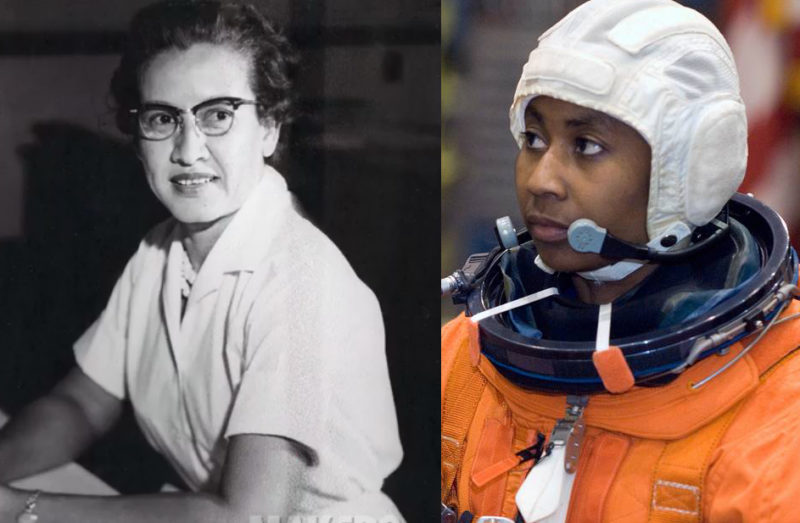
As soon as 2025, NASA is planning to send human explorers to the moon for the first time in more than half a century. Among those astronauts setting foot on the lunar surface will be a woman and a person of color.
That historic announcement, revealed in its FY 2022 budget, effectively made diversity and inclusion an official goal of the Artemis Program, whose first uncrewed launch is expected to lift off later this year.
The fact that gender and racial diversity have become an official requirement of Artemis serves as a stark reminder of NASA’s long journey from its beginnings as a virtually all-white, all-male space agency.
Former astronaut, ex-NASA administrator, and retired U.S. Marine Corps Maj. Gen. Charles F. Bolden Jr. remembers the days when he thought it was nearly impossible for a Black man to go to space.
“I didn’t think I had a chance,” Bolden told FLYING.
Head over to Flying Mag to finish the article to learn about NASA’s dedication to diversity, including how Dr. Jessica Watkins will be the first black woman on ISS!
Learn about the amazing work in in rocket science that African Americans are doing and how a black woman made your favorite 3D movie possible.
More breaking news here.
Comments Are Welcome
Note: We moderate submissions in order to create a space for meaningful dialogue, a space where museum visitors – adults and youth –– can exchange informed, thoughtful, and relevant comments that add value to our exhibits.
Racial slurs, personal attacks, obscenity, profanity, and SHOUTING do not meet the above standard. Such comments are posted in the exhibit Hateful Speech. Commercial promotions, impersonations, and incoherent comments likewise fail to meet our goals, so will not be posted. Submissions longer than 120 words will be shortened.
See our full Comments Policy here.