MacArthur fellow P. Gabrielle Foreman wants to make sure ‘unremembered’ Black history gets taught
Share
Explore Our Galleries









Breaking News!
Today's news and culture by Black and other reporters in the Black and mainstream media.
Ways to Support ABHM?
By Zachary Schermele, NBC News
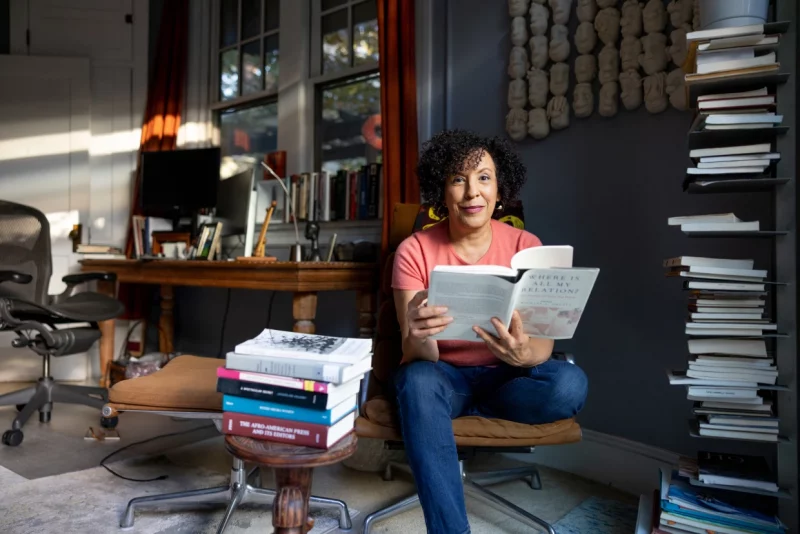
A professor at Penn State University who documented the “unremembered history” of Black political organizing is one of this year’s 25 MacArthur fellows, a select group of scholars who receive $800,000 no-strings-attached “genius grants” to further their work.
The MacArthur Foundation announced Wednesday that P. Gabrielle Foreman, co-director of Penn’s Center for Black Digital Research, was awarded the fellowship for her work “uncovering histories of African American organizing that are still relevant and resonant today.”
“I just could not be more honored,” Foreman told NBC News.
Foreman is the founding director of the Colored Conventions Project, a research initiative dedicated to archiving the history of Black men and women’s efforts to attain civil rights, dating back to the 1830s.
That history, Foreman argues, has been largely erased from academic discussions and mainstream conversations.
“We knew about the anti-slavery movement; we knew about abolition,” she said. “But the very same African Americans that were involved with those were advocating for the very same things that are on the table today.”
Unknown history is one reason why ABHM was established. Our physical museum and online exhibits aim to fix that.
Comments Are Welcome
Note: We moderate submissions in order to create a space for meaningful dialogue, a space where museum visitors – adults and youth –– can exchange informed, thoughtful, and relevant comments that add value to our exhibits.
Racial slurs, personal attacks, obscenity, profanity, and SHOUTING do not meet the above standard. Such comments are posted in the exhibit Hateful Speech. Commercial promotions, impersonations, and incoherent comments likewise fail to meet our goals, so will not be posted. Submissions longer than 120 words will be shortened.
See our full Comments Policy here.