Locked Out: Millions of Voters Are Disenfranchised Ahead of Midterm Elections
Share
Explore Our Galleries









Breaking News!
Today's news and culture by Black and other reporters in the Black and mainstream media.
Ways to Support ABHM?
By Stacy M. Brown, Afram News
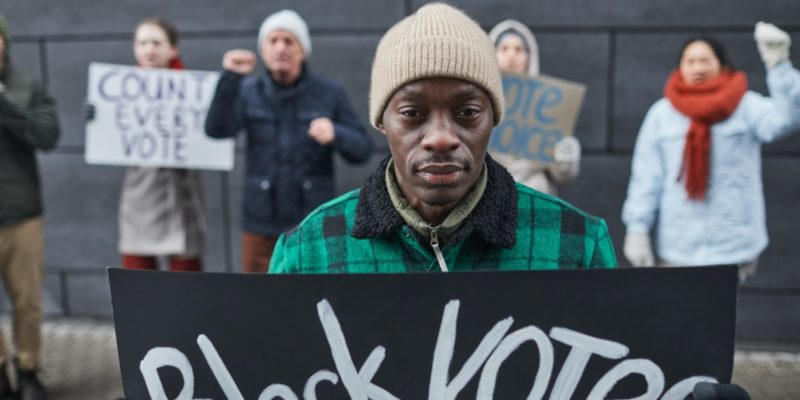
With the midterm election just days away, the District of Columbia-based think tank, The Sentencing Project, has released a new report which found that 4.6 million people can’t vote because of felony convictions.
Researchers pointed out that the number amounts to one in every 50 adults, with three out of four disenfranchised living in their communities, having completed their sentences or remaining supervised while on probation or parole.
“While many states have taken steps to expand the right to vote to people with felony convictions, this report makes it clear that millions of our citizens will remain voiceless in the upcoming midterms,” Amy Fettig, Executive Director of The Sentencing Project, said in a news release.
“Felony disenfranchisement is just the latest in a long line of attempts to restrict ballot access, just like poll taxes, literacy tests, and property requirements were used in the past. It is time for our country to guarantee the right to vote for people with felony convictions.”
The report, “Locked Out 2022,” updates and expands upon 20 years of work chronicling the scope and distribution of felony disenfranchisement in the United States.
The original article includes a link to the report.
This online exhibit examines why so many Black people are in prison.
Check out ABHM’s breaking news archive.
Comments Are Welcome
Note: We moderate submissions in order to create a space for meaningful dialogue, a space where museum visitors – adults and youth –– can exchange informed, thoughtful, and relevant comments that add value to our exhibits.
Racial slurs, personal attacks, obscenity, profanity, and SHOUTING do not meet the above standard. Such comments are posted in the exhibit Hateful Speech. Commercial promotions, impersonations, and incoherent comments likewise fail to meet our goals, so will not be posted. Submissions longer than 120 words will be shortened.
See our full Comments Policy here.