Liverpool museum appeals for information on subject of The Black Boy
Share
Explore Our Galleries









Breaking News!
Today's news and culture by Black and other reporters in the Black and mainstream media.
Ways to Support ABHM?
By Donna Ferguson, The Guardian
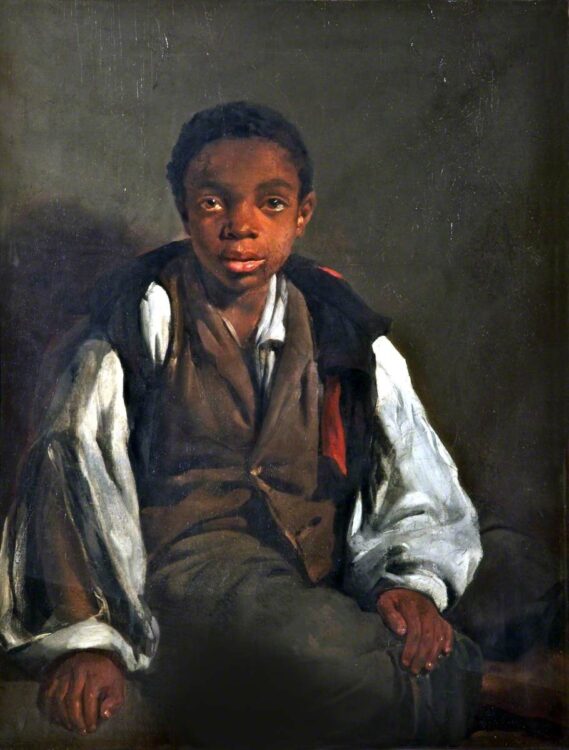
The subject of the painting gazes at the viewer, alone and barefoot in loose and torn clothing. Known only as The Black Boy, his identity has been a mystery for nearly 200 years.
A museum is appealing for information about the mysterious sitter, who is rumoured to have stowed away on a ship to Liverpool – possibly to escape slavery in America – after research about the artist, William Lindsay Windus, and X-rays of the painting revealed potential clues to the boy’s identity.
It is the only painted portrait of an individual Black child on display at the International Slavery Museum in Liverpool and the only oil painting of such a subject that exists within the entire collection of National Museums Liverpool.
Kate Haselden, who researched the 180-year-old portrait for the museum, said that historical paintings representing Black subjects as servants or enslaved people are far more common.
“Single figure Black sitter portraits are very rare,” she said, adding that portraits of Black children are even rarer. “I’ve counted less than 10 for that period in the UK national collections. It’s especially rare to have a finished, sensitive, well-executed painting.”
X-rays have revealed that Windus, a pre-Raphaelite artist who was only 22 when he painted The Black Boy in 1844, painted “four or five” other faces on the canvas before making the unconventional decision to settle on an individual Black child as his final subject.
“He kept working until he created this image,” said Haselden. “This is the one he wanted to keep.”
The Guardian has more information about the painting.
See more paintings featuring Black subjects.
Comments Are Welcome
Note: We moderate submissions in order to create a space for meaningful dialogue, a space where museum visitors – adults and youth –– can exchange informed, thoughtful, and relevant comments that add value to our exhibits.
Racial slurs, personal attacks, obscenity, profanity, and SHOUTING do not meet the above standard. Such comments are posted in the exhibit Hateful Speech. Commercial promotions, impersonations, and incoherent comments likewise fail to meet our goals, so will not be posted. Submissions longer than 120 words will be shortened.
See our full Comments Policy here.