Lawsuit: Police captain went on racist ‘rant’
Share
Explore Our Galleries









Breaking News!
Today's news and culture by Black and other reporters in the Black and mainstream media.
Ways to Support ABHM?
By Geoff Kelly, Investigative Post
Two Black officers and a mental health clinician say their supervisor with Buffalo police made a series of outrageous, derogatory remarks at a May meeting and later kept it up with extensive use of the N word.
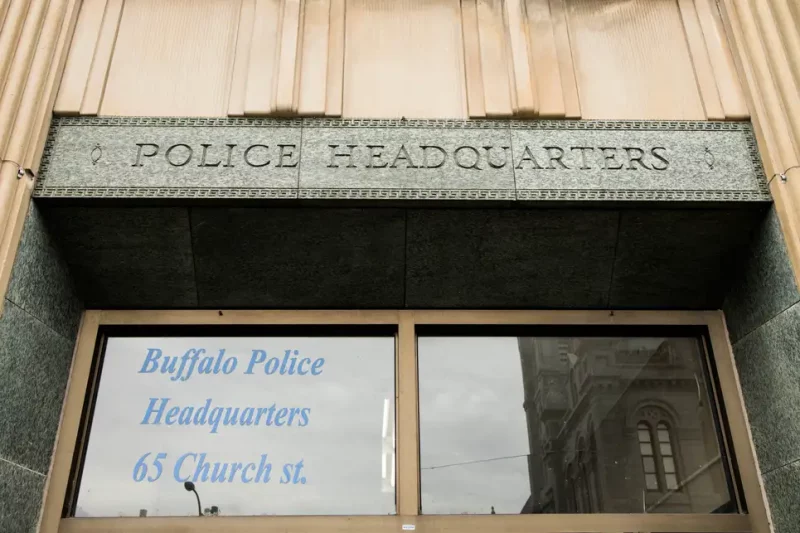
A Buffalo police captain told officers she supervised that Black cops were more likely to cheat on their wives than white cops.
The captain said she’d be suspicious if she saw a Black man in her neighborhood.
She claimed white police officers suffered post-traumatic stress disorder from working in Black neighborhoods, but Black officers did not, because they were more accustomed to violent crime.
The captain told Black officers they should try to understand how the criminality of Black people justified some racism.
These claims are detailed in a lawsuit filed Monday evening in federal court by two Buffalo police officers and a civilian mental health clinician. The target of the lawsuit is Captain Amber Beyer, who oversees the department’s Behavioral Health Team, a unit created two years ago to respond to people suffering mental health crises. The City of Buffalo and the Buffalo Police Department are also named as defendants.
The complainants are Officer Brandon Hawkins, a 15-year veteran of the department; Officer Katelynn Bolden, a six-year veteran; and mental health clinician Erica Seymour, who was employed by an agency contracted by the department to provide mental health services.
According to the lawsuit, Beyer offered these opinions on May 2 in the Behavioral Health Team’s office in police headquarters on Court Street.
That day, a member of the team, Officer Jason Wagstaff, showed Beyer “a viral video … of an incident in which two white police officers in a different jurisdiction racially profiled and pulled over a Black officer (who was wearing his uniform).”
After watching the video, Beyer said she saw “both sides” of the incident, according to the lawsuit.
Officers Bolden and Wagstaff pushed back, saying the video demonstrated the white officers’ “racist intent.”
Just two weeks ago, a teacher lost their job after a racist social media post.
Comments Are Welcome
Note: We moderate submissions in order to create a space for meaningful dialogue, a space where museum visitors – adults and youth –– can exchange informed, thoughtful, and relevant comments that add value to our exhibits.
Racial slurs, personal attacks, obscenity, profanity, and SHOUTING do not meet the above standard. Such comments are posted in the exhibit Hateful Speech. Commercial promotions, impersonations, and incoherent comments likewise fail to meet our goals, so will not be posted. Submissions longer than 120 words will be shortened.
See our full Comments Policy here.