Kimani Gray: Another NYPD Usual Suspect?
Share
Explore Our Galleries









Breaking News!
Today's news and culture by Black and other reporters in the Black and mainstream media.
Ways to Support ABHM?
By Edward Wyckoff Williams, The Root
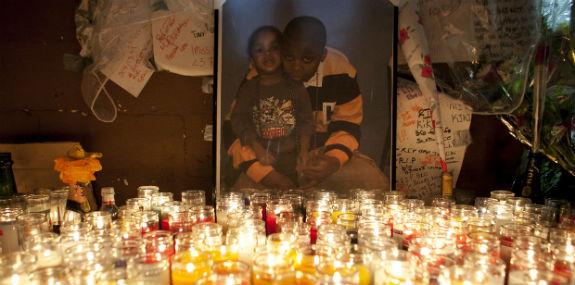
Kimani Gray, a 16-year-old boy from the Flatbush neighborhood of Brooklyn, N.Y., was gunned down by two plainclothes officers last Saturday night. According to official New York City Police Department reports, the officers on patrol approached Kimani when he separated himself from the group he was with and “adjusted his waistband” in “a suspicious manner.” Police say that Kimani had a small revolver — though an eyewitness says the young boy had no weapon at all and was “running for his life.”
Officers fired 11 shots, mortally wounding Kimani. The handgun, which police claim belonged to Kimani, had not been fired, and forensic reports confirming that the gun was actually in his possession have yet to be released. As such, Kimani’s family and friends remain highly suspicious. “We were just hanging out,” 15-year-old Akeem Brown, who was one of six friends with Kimani that night, told the New York Daily News. “We didn’t know he had a gun.”…
As the facts of this particular case continue to unfold, it remains to be seen whether Kimani will be added to the list of innocent young black males killed by the NYPD. Among the most noteworthy — but who hardly constitute an exhaustive list — of victims are Amadou Diallo, Sean Bell and Ramarley Graham. Diallo was shot at 41 times — 19 of which hit and killed him — in 1999 by four New York City police officers in the Soundview section of the Bronx. Diallo, 23, was unarmed and reaching for his wallet to provide identification. All four officers were acquitted of his murder…
This is the America in which young black males live — always and everywhere suspected of violent crime, guilty before proved innocent. The NYPD has been quick to release information suggesting that Kimani had a criminal record. His past violations, according to police reports, include possession of stolen property and inciting a riot….
Kimani Gray’s death is worrisome mostly because of the NYPD’s dark history on matters of racial violence — leaving members of the community to wonder about the veracity of the department’s version of events and to question if a gun was planted on the teenager to justify the shooting. Brooklyn residents, many of whom seek an end to the all-too-common violence experienced by black and brown people at the hands of New York’s law-enforcement officers, have found a new martyr to give voice to an old cause and have taken to the streets to protest.
Read the full story Here
Read more Breaking News Here
Comments Are Welcome
Note: We moderate submissions in order to create a space for meaningful dialogue, a space where museum visitors – adults and youth –– can exchange informed, thoughtful, and relevant comments that add value to our exhibits.
Racial slurs, personal attacks, obscenity, profanity, and SHOUTING do not meet the above standard. Such comments are posted in the exhibit Hateful Speech. Commercial promotions, impersonations, and incoherent comments likewise fail to meet our goals, so will not be posted. Submissions longer than 120 words will be shortened.
See our full Comments Policy here.