Juneteenth, the newest federal holiday, is gaining awareness
Share
Explore Our Galleries









Breaking News!
Today's news and culture by Black and other reporters in the Black and mainstream media.
Ways to Support ABHM?
Alana Wise, NPR
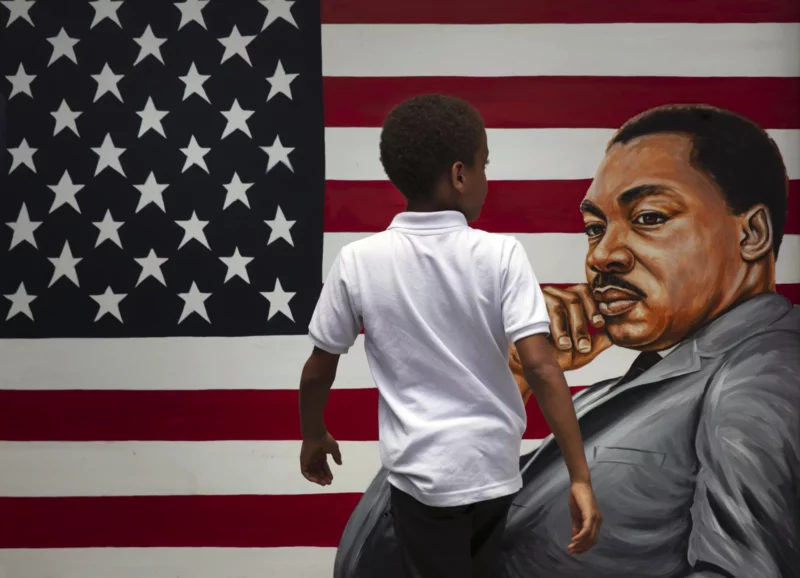
Americans have been celebrating Juneteenth this weekend, the third year since the holiday was given federal status by President Biden in 2021.
The date commemorates the fall of slavery in Galveston, Texas, two years after the Emancipation Proclamation was issued in 1863 to free enslaved Black people held in the Confederacy.
News of Union troops’ victory over the Confederates spread slowly across the South, eventually reaching the shores of Galveston in 1865.
“We are not celebrating the history of Juneteenth. We are celebrating the symbolism of Juneteenth,” said Leslie Wilson, professor of history at Montclair State University in New Jersey.
“The symbolism of Juneteenth is the transition from slavery to freedom.”
Celebrations of the holiday started out regionally in Texas, but as Black Americans spread out across the United States, they brought their traditions with them, including remembrances for one of the final vestiges of chattel slavery.
[…]
“During the civil rights movement in the 1960s, with Civil Rights and also with the Black Power movement, Juneteenth became a symbol of strength as well as a symbol of triumph for African-Americans,” [said Wilson].
[…]
In 2021, when the holiday gained federal recognition, just 37 percent of American adults said they knew at least something about Juneteenth, according to polling by Gallup.
Just a year later, that number would spike to nearly 60 percent.
Read more about the recognition the holiday is gaining in the original article.
In this virtual exhibit, learn what life was like for newly-freed Black communities in the 19th century.
Find more Breaking News here.
Comments Are Welcome
Note: We moderate submissions in order to create a space for meaningful dialogue, a space where museum visitors – adults and youth –– can exchange informed, thoughtful, and relevant comments that add value to our exhibits.
Racial slurs, personal attacks, obscenity, profanity, and SHOUTING do not meet the above standard. Such comments are posted in the exhibit Hateful Speech. Commercial promotions, impersonations, and incoherent comments likewise fail to meet our goals, so will not be posted. Submissions longer than 120 words will be shortened.
See our full Comments Policy here.