Jason Reynolds: ‘Snoop Dogg once told white folks: ‘I know you hate me. But your kids don’t.’ That’s how I feel
Share
Explore Our Galleries









Breaking News!
Today's news and culture by Black and other reporters in the Black and mainstream media.
Ways to Support ABHM?
By Sian Cain, The Guardian
America’s ambassador for young people’s literature talks about touring Trump country, facing down racism and why there’s no such thing as a bad kid
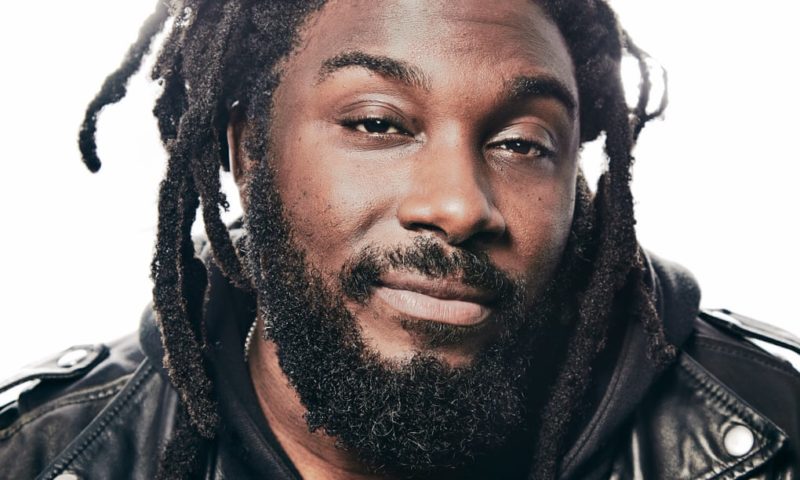
In any other year, Jason Reynolds would be travelling up and down the US visiting schools and juvenile detention centres to speak to children, sometimes at three or four locations a day. Even when the local police are angry that he’s there, or when one of the parents has connections to the Ku Klux Klan, or the school librarian has received threats for inviting him. And without fail, from the moment Reynolds enters the room, kids fall over themselves to meet the guy in jeans who will speak to them about rap and sneakers as much as the importance of reading, of being kind.
Everything about Reynolds – the bestselling books, obviously, but also the melodic, easy way he speaks and his carefully selected attire – is for the kids. “I was raised to be meticulous about my appearance,” says the 36-year-old. “But these kids, they need to know that I’m not far away – so it’s sneakers, tattoos, leather jackets, jeans, long hair, all this stuff they think is cool. And when I show up, they’re like: ‘Yo, that’s the dude who writes books?’ It can change the way they think about what it is to be an author, what it is to be literate, a bookworm, a nerd. And I take great pride in that.”
This year, instead of crisscrossing the country, America’s national ambassador for young people’s literature (an equivalent to the UK’s children’s laureate) has been cooped up at home in Washington for seven months. “I’m happy to be home, but I’m missing the road, missing my life.” Somehow, he’s still changing lives. “Anyone need groceries?” he tweeted in April, personally buying food for strangers struggling in the pandemic. Then he launched Brain Yoga, a weekly game on his Instagram account where he challenges kids to call him with their best inventions. Then he buys every single child some books and treats them all like they are his best friend. For some of them, he could be theirs…
Learn more about Black YA writers and their books here and here.
More Breaking News here.
Comments Are Welcome
Note: We moderate submissions in order to create a space for meaningful dialogue, a space where museum visitors – adults and youth –– can exchange informed, thoughtful, and relevant comments that add value to our exhibits.
Racial slurs, personal attacks, obscenity, profanity, and SHOUTING do not meet the above standard. Such comments are posted in the exhibit Hateful Speech. Commercial promotions, impersonations, and incoherent comments likewise fail to meet our goals, so will not be posted. Submissions longer than 120 words will be shortened.
See our full Comments Policy here.