Introducing Black Hair Defined
Share
Explore Our Galleries









Breaking News!
Today's news and culture by Black and other reporters in the Black and mainstream media.
Ways to Support ABHM?
A HuffPost project aiming to untangle conversations about our crowning glory.
By Ja’han Jones, huffpost.com
In the United States of America, Black hair is so often seen through a white lens.
Several highly publicized incidents over the past few years have shown the extent of the problem: There was Andrew Johnson, the high school wrestler forced to cut his locs before competing in a match; there was Sally Hazelgrove, a white woman running a nonprofit organization for at-risk youth who celebrated cutting young men’s locs for a “better life”; there have been innumerable cases of Black people — Black women, mostly — whose hairstyles were rebuked in the workplace.
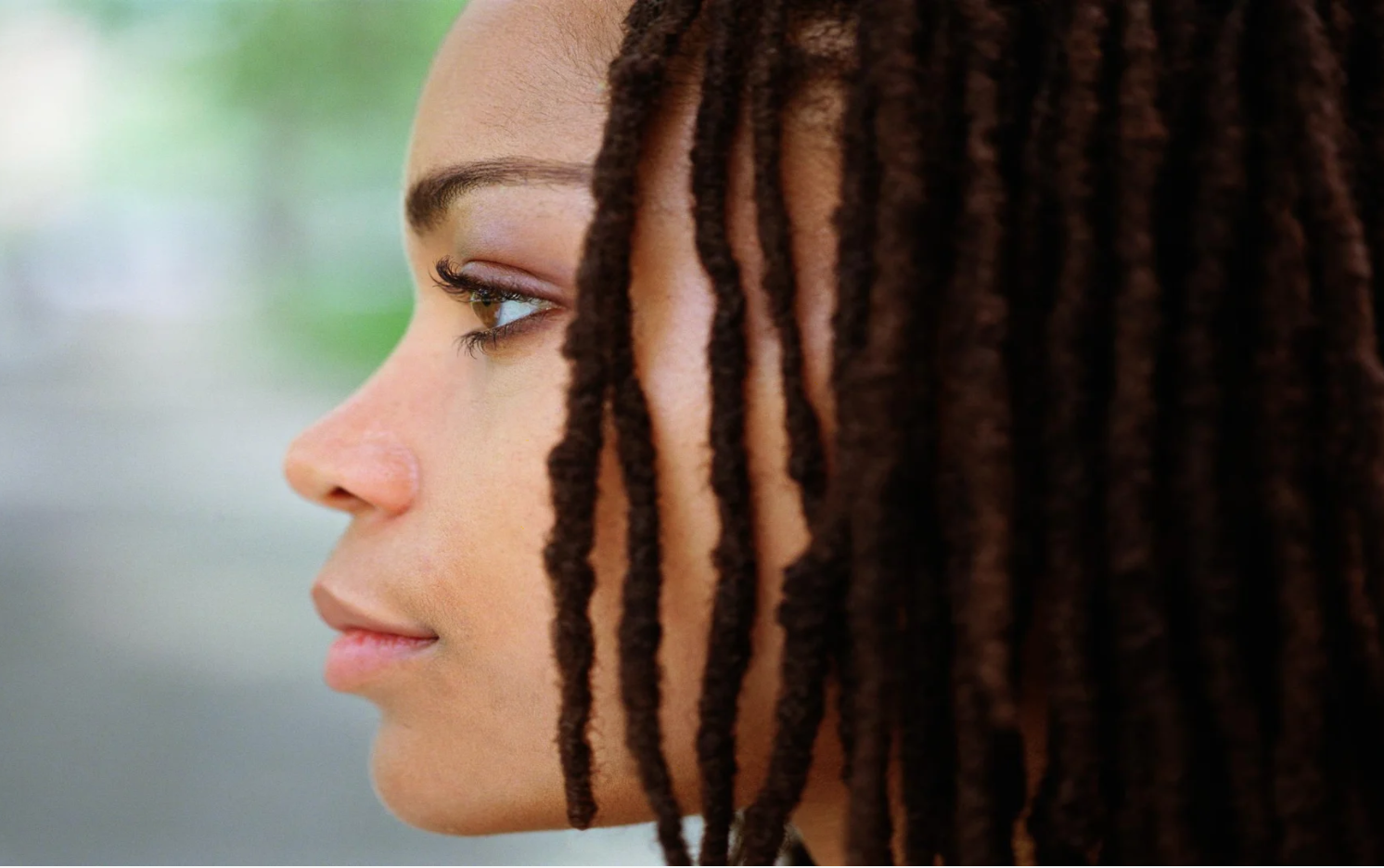
In incidents like these, the bigotry is twofold. There is the bigotry of discrimination: not being allowed to work somewhere, model in a certain fashion show or anchor a specific news broadcast because of one’s hair. (It’s a problem so systemic that three states — New York, New Jersey and California — all issued bans outlawing discrimination against Black hair in workplaces, at schools and in public spaces.) But then there is also the bigotry of having to seek approval in the first place. Black hair deserves to be defined by more than its fiercest critics.
With that in mind, we created Black Hair Defined, a project intended to amplify Black discussions about Black hair.
Black hair is an artistic form of expression, sometimes conveying what Black people wish to share about ourselves — neatness, messiness, nakedness, cultural pride, personal independence and all sorts of other feelings. And the time we spend treating our hair and heads — combing, coiffing and massaging them to our liking ― is an expression of the care and sensitivity we feel we deserve.
In “Hair Love,” the animated, Oscar-nominated short film about a Black father discovering how to style his daughter’s hair, filmmaker Matthew Cherry depicts the hair care experience as tender and intimate. In the film, we see a father, Stephen, and his daughter, Zuri, bonding over Zuri’s love for her locks. It is Zuri’s exuberant self-love that ultimately convinces her father her hair is not to be feared…
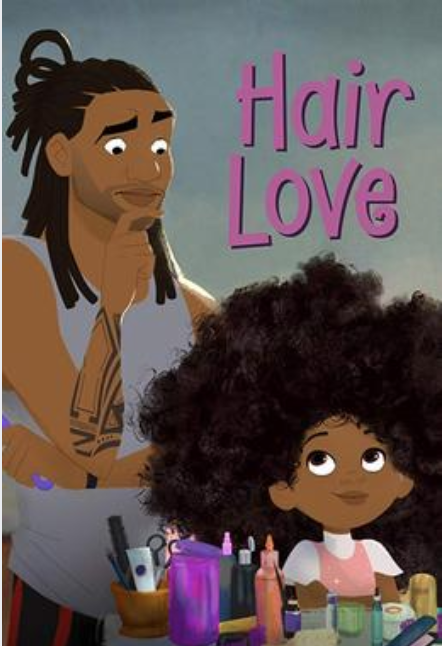
Hair Love is a 2019 American animated short film written and directed by Matthew A. Cherry and co-produced with Karen Rupert Toliver. It follows the story of a man who must do his daughter’s hair for the first time.
Full article here
Oscar-winning Hair Love here
The CROWN Act info here
Comments Are Welcome
Note: We moderate submissions in order to create a space for meaningful dialogue, a space where museum visitors – adults and youth –– can exchange informed, thoughtful, and relevant comments that add value to our exhibits.
Racial slurs, personal attacks, obscenity, profanity, and SHOUTING do not meet the above standard. Such comments are posted in the exhibit Hateful Speech. Commercial promotions, impersonations, and incoherent comments likewise fail to meet our goals, so will not be posted. Submissions longer than 120 words will be shortened.
See our full Comments Policy here.