In NYC, how a new generation of Afro-Latinos celebrates their Blackness
Share
Explore Our Galleries









Breaking News!
Today's news and culture by Black and other reporters in the Black and mainstream media.
Ways to Support ABHM?
By Natasha S. Alford, TheGrio.com
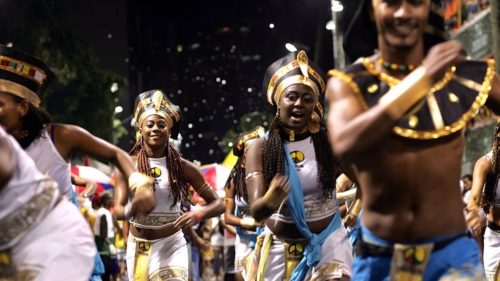
Francia Rivera and Jasmine Celini have finally found her.
The two young women stare in amazement at the life-sized poster of a girl who looks just like them. She is brown-skinned with big dark fluffy hair, a full nose and her arms flexed up like a Black “Rosie the Riveter.”
She also happens to have a cape and is flying in the air, but that’s not unusual. It’s what any superhero is supposed to do: defy gravity and expectations.
“La Boriqueña” is the first Afro-Latina character in the superhero universe, designed by Puerto Rican Marvel animator and activist, Edgardo Miranda-Rodriguez, and her posters are drawing a crowd at the 2019 Afro-Latino Festival in New York.
“I was like oh my Gosh, somebody who looks like me with my hair!” says Francia, 21, a college student and dancer who is Dominican and Puerto Rican, while holding her mini-poster of La Boriqueña, her own big black hair cascading down her brown shoulders.
“It feels amazing to be represented,” says Jasmine, 22, who is Francia’s niece and also Dominican and Puerto Rican.
Afro-Latinos — or Black people with Latin ethnicity and cultural roots– are not a new population. Since the days of the trans-Atlantic slave trade, when Africans who survived deadly boat rides were shipped throughout the Caribbean and North and South America, Afro-Latinos have contributed and given birth to much of what we understand as “Latin” culture today, from music to food to spirituality.
Yet somehow, Black Latinos are rendered so invisible in media and popular culture representations, that even some Afro-Latinos themselves don’t know — or want to be perceived as Black.
But at the Afro-Latino Fest, which ran for its second year last weekend, Blackness is centered, affirmed and celebrated. The podcast speaker series, live music performances and vendors, led to a sold-out Saturday at the festival this year. It’s exactly why Miranda-Rodriguez chose to set up a vendor booth.
“A lot of times, Puerto Ricans especially, we hide and we shy away from our Africanness. So in creating this character, yeah she’s a Puerto Rican superhero but I celebrate her blackness.”
To read the full article, click Here.
To read more Breaking News click Here.
Comments Are Welcome
Note: We moderate submissions in order to create a space for meaningful dialogue, a space where museum visitors – adults and youth –– can exchange informed, thoughtful, and relevant comments that add value to our exhibits.
Racial slurs, personal attacks, obscenity, profanity, and SHOUTING do not meet the above standard. Such comments are posted in the exhibit Hateful Speech. Commercial promotions, impersonations, and incoherent comments likewise fail to meet our goals, so will not be posted. Submissions longer than 120 words will be shortened.
See our full Comments Policy here.