I had to flee the US – as a foreign, Black, pro-Palestinian activist, I tick every box on Ice’s list
Share
Explore Our Galleries









Breaking News!
Today's news and culture by Black and other reporters in the Black and mainstream media.
Ways to Support ABHM?
By Amandla Thomas-Johnson, The Guardian
I’ve never been accused of any crimes, let alone prosecuted. My experience sums-up the draconian plight of non-citizens in the US
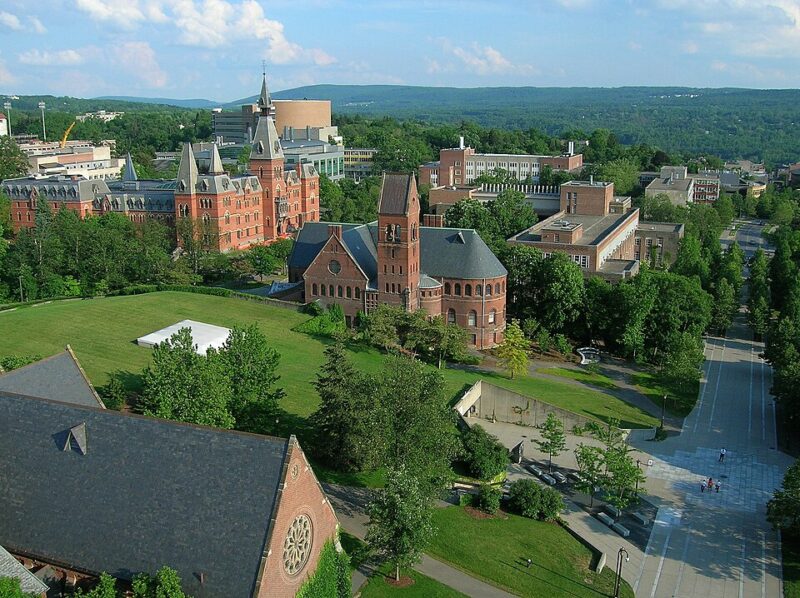

When I arrived in the US four years ago to start my doctorate at Cornell University, I thought I’d be the last person to be hunted down by the immigration authorities. As far as I could tell, “the special relationship” meant that a British passport carried a sort of immunity akin to that enjoyed by diplomats; it was a mobility that allowed me to work, after all, as a journalist unscathed across west Africa’s restive Sahel belt for years.
Things began to fall apart after I attended a pro-Palestine protest on campus in September last year. We had brought a job fair to a standstill – because it featured booths from Boeing and L3Harris, companies that supplied Israel with the armaments it needed to carry out its genocidal campaign in Gaza. Although I was there for just five minutes, I was subsequently banned from campus, a punishment that felt like a kind of house arrest because my home was on the university’s Ithaca campus in upstate New York. While I could continue living there, I was barred from entering the university premises.
In January, as Donald Trump steamrolled into office brandishing an arsenal of executive orders targeting non-citizen student protesters, I left my home and went into hiding at the remote home of a professor, fearing the reach of Immigration and Customs Enforcement (Ice). Three months later, I self-deported to Canada, then flew to Switzerland. I was prompted to flee after a friend, who had spent time with me in Ithaca, was detained at a Florida airport – on the other side of the country – and questioned about my whereabouts. I did not return to the UK as reports that pro-Palestine journalists had been arrested there made me fearful.
I hoped my arrival in Switzerland would mark the end of my ordeal. But two weeks in, two distressing emails reached my inbox. The first was from Cornell, informing me that the US government had effectively terminated my student visa status. The second came from Google, informing me that it had “received and responded to legal process” and handed my data to the Department of Homeland Security. These emails arrived 90 minutes apart.
The quickfire emails confirmed my hunch that I had been under surveillance and that if I attempted to re-enter the US, I would likely be detained by Ice, like other student protesters. But the secrecy surrounding these procedures and the lack of due process to challenge them raised more questions than they answered.
Comments Are Welcome
Note: We moderate submissions in order to create a space for meaningful dialogue, a space where museum visitors – adults and youth –– can exchange informed, thoughtful, and relevant comments that add value to our exhibits.
Racial slurs, personal attacks, obscenity, profanity, and SHOUTING do not meet the above standard. Such comments are posted in the exhibit Hateful Speech. Commercial promotions, impersonations, and incoherent comments likewise fail to meet our goals, so will not be posted. Submissions longer than 120 words will be shortened.
See our full Comments Policy here.