House repairs, a car, grandkids: Where Evanston’s reparations payments are going
Share
Explore Our Galleries









Breaking News!
Today's news and culture by Black and other reporters in the Black and mainstream media.
Ways to Support ABHM?
By Michela Moscufo, NBC
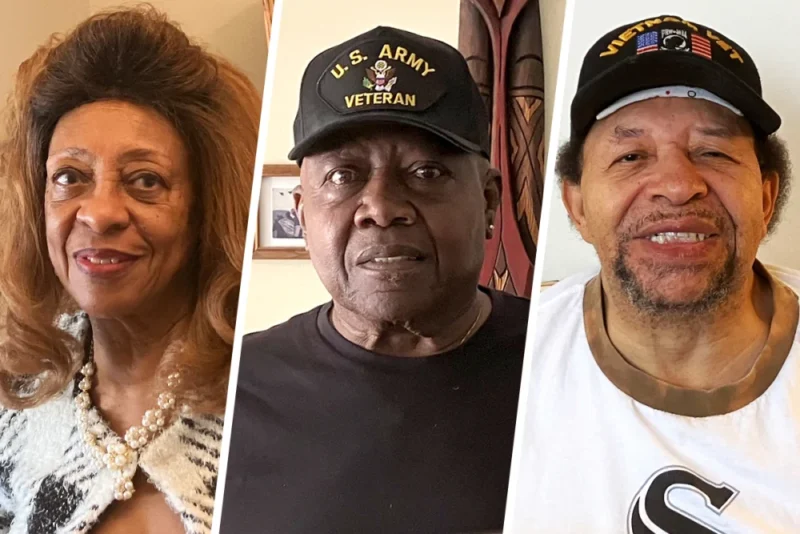
EVANSTON, Ill. — Kenneth Wideman has lived in Evanston his entire life, in a neighborhood bordered by a canal and elevated railroad tracks called the 5th Ward.
His parents moved there from South Carolina, part of an exodus of 6 million Black people fleeing the Jim Crow South over a 60-year period known as the Great Migration. By the time Wideman was born in the 1940s, Evanston was the state’s largest Black suburb, and 95% of the city’s Black population lived in the 5th Ward.
The concentration of Black residents in that neighborhood, however, was no accident.
The city began pushing Black residents out of neighborhoods outside the 5th Ward through targeted zoning in 1919. Later, federal agencies facilitated racially restrictive housing rules and banking discrimination, discouraging lenders from making “risky” loans in predominantly Black neighborhoods such as the 5th Ward.
In 1969, after the federal Fair Housing Act prohibited housing discrimination based on race, Evanston city officials passed local fair housing ordinances. But decades later, the 5th Ward had the lowest property values in the city, median income below the city’s average, and is Evanston’s “only neighborhood with areas classified as food deserts,” according to a 2019 report by the city clerk.
That year, the city set out to create the country’s first reparations program to atone for its history of racial discrimination. Since the program began in 2022, Evanston has awarded $25,000 checks and in-kind financial assistance to more than 200 people.
Wideman was part of the first cohort of recipients, selected by age. To be eligible, a person has to be Black and prove they lived in the city between 1919 and 1969 — the period when state-sponsored segregation and redlining were rampant — or be a direct descendant of someone who did.
“I’m very fortunate and blessed to receive the reparations,” he said. “I think it could have been more. But I’m happy.”
Wideman is one of three Evanston residents who sat down with NBC News to discuss their experience of growing up in the 5th Ward, applying for and receiving reparations.
Learn how the recipients used the money.
Reparations are one way to help those who have experienced generational inequality stemming from slavery and continued through the Jim Crow era.
Comments Are Welcome
Note: We moderate submissions in order to create a space for meaningful dialogue, a space where museum visitors – adults and youth –– can exchange informed, thoughtful, and relevant comments that add value to our exhibits.
Racial slurs, personal attacks, obscenity, profanity, and SHOUTING do not meet the above standard. Such comments are posted in the exhibit Hateful Speech. Commercial promotions, impersonations, and incoherent comments likewise fail to meet our goals, so will not be posted. Submissions longer than 120 words will be shortened.
See our full Comments Policy here.