Hollywood’s minority writers fear diversity to fall further down the agenda after strike
Share
Explore Our Galleries









Breaking News!
Today's news and culture by Black and other reporters in the Black and mainstream media.
Ways to Support ABHM?
By Danielle Broadway, Reuters
Some writers are troubled by what they see as institutional bias after several diversity initiatives suffered during cost-cutting this year.
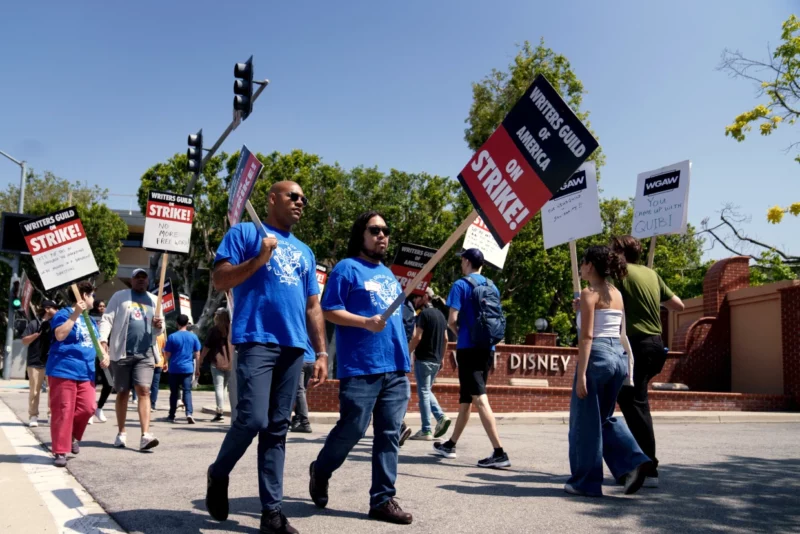
After the Writers Guild of America approved a new three-year contract with major studios, Hollywood writers from underrepresented groups, many nervous about their job security in the rapidly changing industry, aim to refocus studios’ attention on increasing diversity.
The WGA represents 11,500 film and television writers, but many minority members — people of color, LGBTQ+ individuals, disabled people and women — hoped the negotiations would have made diversifying the business a priority.
The Guild’s demands did not directly address diversity. But WGA West board member and negotiating committee member Angelina Burnett said the contract talks were meant to protect everyone’s economic stability. The new contract was approved on Monday.
However, some Hollywood minority writers are troubled by what they see as institutional bias after several diversity initiatives suffered during cost-cutting this year. Studios are not as outspoken about the inclusion pledges they made after the police killing of George Floyd in 2020.
Some writers have decided to launch their own initiatives to revive those promises and support other minority writers.
Finish the article to learn more about the initiatives.
Don’t forgot to stop by our online exhibits.
Comments Are Welcome
Note: We moderate submissions in order to create a space for meaningful dialogue, a space where museum visitors – adults and youth –– can exchange informed, thoughtful, and relevant comments that add value to our exhibits.
Racial slurs, personal attacks, obscenity, profanity, and SHOUTING do not meet the above standard. Such comments are posted in the exhibit Hateful Speech. Commercial promotions, impersonations, and incoherent comments likewise fail to meet our goals, so will not be posted. Submissions longer than 120 words will be shortened.
See our full Comments Policy here.