The HistoryMakers: Documenting untold stories of African American achievement
Share
Explore Our Galleries









Breaking News!
Today's news and culture by Black and other reporters in the Black and mainstream media.
Ways to Support ABHM?
By Bill Whitaker, CBS News – 60 Minutes
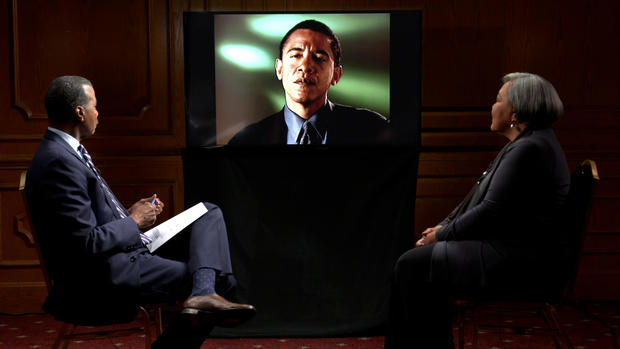
At a time when we’re having a national discussion about how Black history fits into the American mosaic, we discovered that many stories of Black achievement are slipping away, going unpreserved for future generations. A nonpartisan, nonprofit organization called the historymakers is hoping to change that, by creating an expansive digital archive of first-person accounts. Founder Julieanna Richardson told us she’s determined to document the Black experience in America, one story at a time.
Julieanna Richardson: In society today, what is being debated? Who has value and who doesn’t? You preserve what has value, you throw away what doesn’t. That’s why the preservation is so critical.
Julieanna Richardson has been preserving Black American stories for the past two decades. One day, she’s interviewing the first Black president of Rutgers University, Jonathan Holloway.
Julieanna Richardson in HistoryMakers interview: What things did you find out about?
Jonathan Holloway in HistoryMakers interview: Well, the sort of the daily racism my siblings dealt with.
Another day, it’s Brandeis University professor Anita Hill.
Anita Hill in HistoryMakers interview: In three counties, the census takers actually bothered to list the slaves by name. And that’s how I met and found out who my great, great grandparents were.
Hill, known for her testimony against Clarence Thomas, wasn’t easy to get.
Julieanna Richardson: It’s been a long time coming. I’m really happy to have you here.
Bill Whitaker: Why is it important to have these first-person accounts?
Julieanna Richardson: How else are you going to know what really has happened in the Black community if you don’t allow the community to speak for itself?
Bill Whitaker: You’ve called these America’s missing stories.
Julieanna Richardson: They are. They’re America’s missing stories. And American history won’t be complete without them.
To enjoy the complete conversation and the 60 minutes piece in its entirety, click here.
For more Breaking News click here.
For more ABHM galleries click here.
Comments Are Welcome
Note: We moderate submissions in order to create a space for meaningful dialogue, a space where museum visitors – adults and youth –– can exchange informed, thoughtful, and relevant comments that add value to our exhibits.
Racial slurs, personal attacks, obscenity, profanity, and SHOUTING do not meet the above standard. Such comments are posted in the exhibit Hateful Speech. Commercial promotions, impersonations, and incoherent comments likewise fail to meet our goals, so will not be posted. Submissions longer than 120 words will be shortened.
See our full Comments Policy here.