‘Harry & Meghan’ wrestles with lingering impact of racism and colonialism
Share
Explore Our Galleries









Breaking News!
Today's news and culture by Black and other reporters in the Black and mainstream media.
Ways to Support ABHM?
By Henry Austin, Leila Sackur and Laura Saravia, NBC News
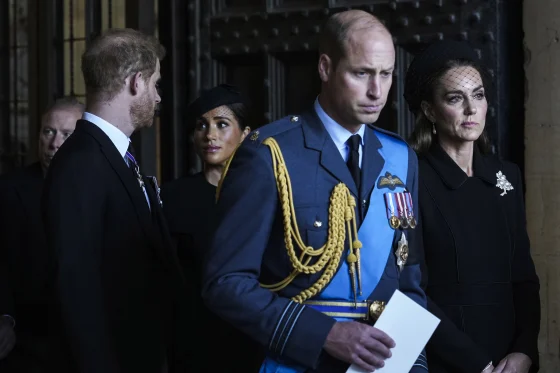
LONDON — Four years ago, the wedding of Prince Harry and Meghan, the Duchess of Sussex, carried the promise of a modernized monarchy. A member of the British royal family, the whitest of institutions, was marrying a mixed-race American woman.
But in their docuseries on Netflix — the second installment of which will be released Thursday — the Sussexes, now based in the U.S., suggest that the ghosts of slavery and centuries of colonialism risk overshadowing a royal couple that had embodied hopes of reconciliation.
The first three of the six episodes touch on Britain’s history as the world’s largest empire — controlling swaths of Asia, Africa and the Americas — and seek to link this legacy with the treatment of Meghan even before she married Harry, both by the media and the royals themselves.
It highlights the intense media scrutiny Meghan and her family were subjected to when the couple’s relationship became public and headlines published in British newspapers including, “Harry’s girl is (almost) straight outta Compton,” and another saying, “One’s gone GangstER.”
[…]
In the documentary, Meghan said she hadn’t thought much about her race until the media made it an issue.
Markle, who has often been victim to racism, previously discussed the angry Black woman stereotype.
Comments Are Welcome
Note: We moderate submissions in order to create a space for meaningful dialogue, a space where museum visitors – adults and youth –– can exchange informed, thoughtful, and relevant comments that add value to our exhibits.
Racial slurs, personal attacks, obscenity, profanity, and SHOUTING do not meet the above standard. Such comments are posted in the exhibit Hateful Speech. Commercial promotions, impersonations, and incoherent comments likewise fail to meet our goals, so will not be posted. Submissions longer than 120 words will be shortened.
See our full Comments Policy here.