Governor Murphy Signs Bipartisan Bill Establishing Black Heritage Trail in New Jersey
Share
Explore Our Galleries









Breaking News!
Today's news and culture by Black and other reporters in the Black and mainstream media.
Ways to Support ABHM?
From the offices of Governor Phil Murphy
Trail Will Highlight Remarkable Achievements and Legacies of New Jersey’s African American Figures
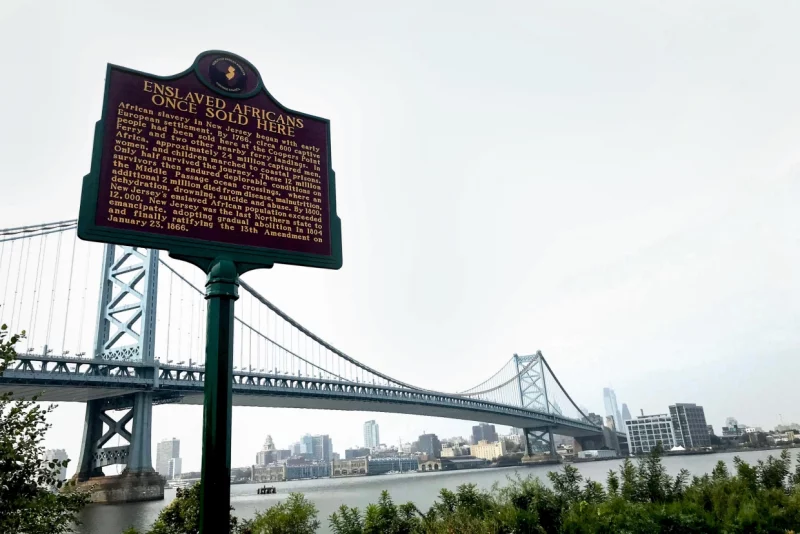
In a room at the historic City of Newark’s Public Library, surrounded by state and local officials, as well as activists, Governor Phil Murphy today signed bipartisan bill A2677. The bill requires the New Jersey Historical Commission to establish a Black Heritage Trail to promote awareness and appreciation of Black history, heritage, and culture in the State. The Black Heritage Trail will highlight Black heritage sites through historical markers and a trail-like path that connect the stories of Black life and resiliency in the State.
“I am honored to sign this bill today, establishing a Black Heritage Trail in New Jersey. However, our work does not stop here,” said Governor Murphy. “Celebrating and commemorating Black history is not something that we should relegate to only the month of February or to Juneteenth. Black history is New Jersey history. It must be honored every day of the year.”
In January 2021, the New Jersey Division of Travel and Tourism within the Department of State launched the New Jersey Black Heritage Trail, which invites visitors and residents to “discover the remarkable achievements and legacies of New Jersey’s African American scholars, famous figures and everyday citizens who shaped the State’s history for nearly four centuries.” The New Jersey Black Heritage Trail will highlight landmarks, heritage sites, museums and modern-day attractions, which will be featured on downloadable three-day trip itineraries and map views. Under the bill, which appropriates $ 1million to the Department of State to establish the historical markers, the Historical Commission must give special consideration to sites that are in close geographic proximity, thematically linked by surrounding arts and other tourism destinations, or recommended by the New Jersey Black Cultural and Heritage Initiative Foundation.
“The Black Heritage Trail will highlight major historical contributions of Black Americans and the events that helped shape our state,” said U.S. Representative Donald M. Payne. “There are many stories in New Jersey’s Black culture that need to be told. New Jersey played a significant role in the Underground Railroad that helped enslaved Blacks in the southern U.S. escape to freedom in the north. In addition, many Blacks became permanent residents of the state during the Great Migration of southern Blacks into northern cities after World War I. I applaud Governor Murphy for signing the bill to create this trail and focusing more attention on the significant contributions of Blacks to New Jersey’s history.”
“With the establishment of the Black Heritage Trail, New Jerseyans and visitors from around the world will learn more about the significant contributions, history, and culture of Black people throughout New Jersey over the last four hundred years,” said Secretary of State Tahesha Way. “Through partnership with the , this is an exciting opportunity for the New Jersey Historical Commission to help people identify and understand the places where Black people made history in New Jersey.”
Comments Are Welcome
Note: We moderate submissions in order to create a space for meaningful dialogue, a space where museum visitors – adults and youth –– can exchange informed, thoughtful, and relevant comments that add value to our exhibits.
Racial slurs, personal attacks, obscenity, profanity, and SHOUTING do not meet the above standard. Such comments are posted in the exhibit Hateful Speech. Commercial promotions, impersonations, and incoherent comments likewise fail to meet our goals, so will not be posted. Submissions longer than 120 words will be shortened.
See our full Comments Policy here.