Generational Black Homes in LA Reduced to Ash Amid Growing Wildfires
Share
Explore Our Galleries









Breaking News!
Today's news and culture by Black and other reporters in the Black and mainstream media.
Ways to Support ABHM?
By Adam Mahoney, Capital B
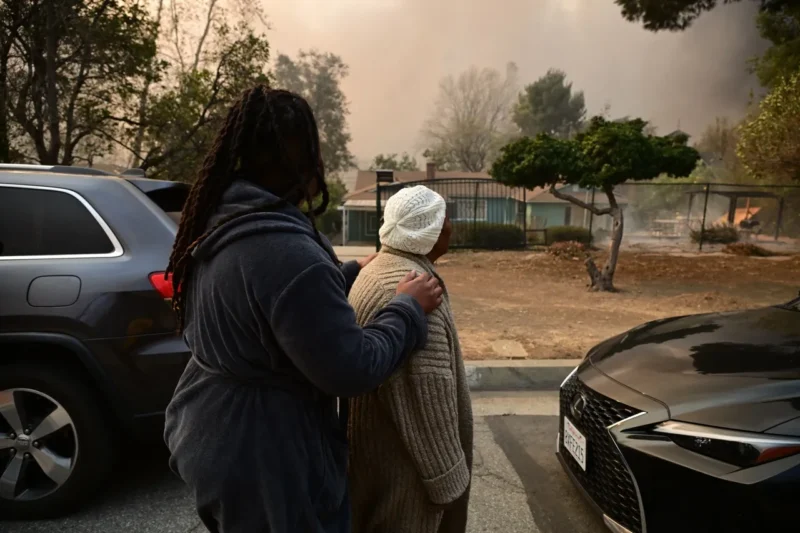
Throughout Los Angeles, ash, smoke, wind, and flames are rewriting the landscape and, although less publicized, Black history.
As of 9 a.m. on Jan. 10, the fires ravaging neighborhoods across the western and northeastern parts of the city have swelled to become the most destructive ever to hit Los Angeles. The convergence of more than four large fires spreading across the country’s largest metro area has created a mega-catastrophe for Southern Californians.
At least 10 people have been killed, but many of the burned neighborhoods haven’t been searched yet — in part because the two largest fires, the Palisades and the Eaton fires, were both under 10% contained.
While many have focused on the multimillion-dollar mansions reduced to ash in west Los Angeles celebrity enclaves, some of the oldest Black neighborhoods in the region, including a suburb known as Altadena, have been burned to the ground. The first identified victim of the fires was Victor Shaw, a 66-year-old Black man who died with a garden hose in his hand trying to defend the home that had been in his family for nearly 55 years.
Social media has been flooded with GoFundMe’s for Black families who’ve lost their generational homes, some dating back to the 1930s when the first wave of Black Southerners reached Los Angeles. Some of the region’s oldest Black institutions, like churches and restaurants, have been reduced to rubble.
Mahoney explains the challenges presented during recovery.
Follow this story in our breaking news section.
Comments Are Welcome
Note: We moderate submissions in order to create a space for meaningful dialogue, a space where museum visitors – adults and youth –– can exchange informed, thoughtful, and relevant comments that add value to our exhibits.
Racial slurs, personal attacks, obscenity, profanity, and SHOUTING do not meet the above standard. Such comments are posted in the exhibit Hateful Speech. Commercial promotions, impersonations, and incoherent comments likewise fail to meet our goals, so will not be posted. Submissions longer than 120 words will be shortened.
See our full Comments Policy here.