For a Notorious Police Department, This Killing Was the Last Straw
Share
Explore Our Galleries









Breaking News!
Today's news and culture by Black and other reporters in the Black and mainstream media.
Ways to Support ABHM?
Christopher Maag, The New York Times
After a string of police shootings and abuse in Paterson, N.J., the killing of Najee Seabrooks led the state attorney general to seize control of the department.
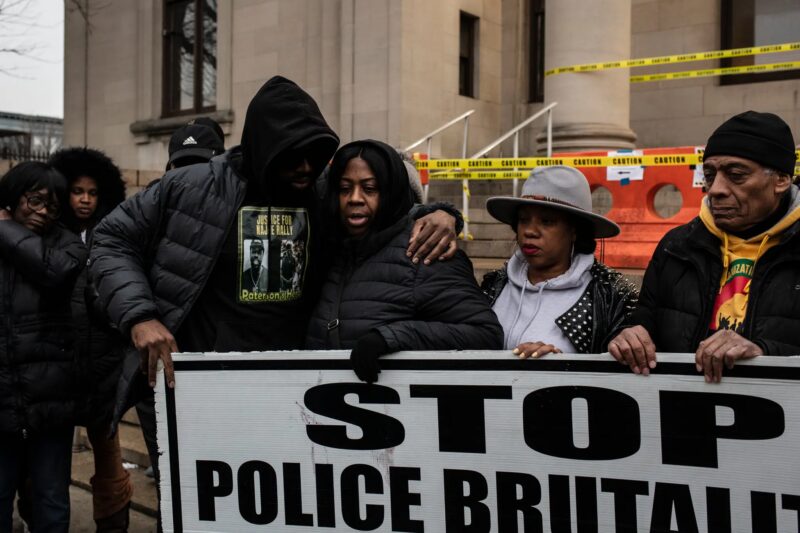
When police officers in Paterson, N.J., responded to a 911 call in March from a man in the midst of a mental health crisis, they found someone they knew well.
The man, Najee Seabrooks, had worked for years to reverse a spike in shootings in Paterson, the state’s third largest city, by building friendships with gunshot victims and persuading them not to retaliate against their attackers.
But now, Mr. Seabrooks, 31, had barricaded himself in a bathroom. The police arrived in riot gear and trained their guns on the bathroom door. After a four-hour standoff, Mr. Seabrooks emerged with a knife. The police shot and killed him. Soon the city erupted — not for the first time — in bitter protests.
Police officers in Paterson have robbed, beaten, shot and killed scores of Black men, earning the department a reputation as one of the most troubled in New Jersey. Between 2018 and 2020, the city’s Black residents, who make up about a quarter of the population, were the subject of 57 percent of the police department’s 600-plus uses of force, according to an investigation last year by the Police Executive Research Forum, a national association of police leaders.
[…]
Stories of police abuse in Paterson have become familiar to some New Jersey residents. But the state’s response to Mr. Seabrooks’s death was unique: Three weeks later, Matthew J. Platkin, New Jersey’s attorney general, took direct control of the police department.
The takeover, Mr. Platkin said in an interview, was a result of “high-profile misconduct by the Paterson Police Department, including a number of criminal offenses” committed by police officers. “I couldn’t go to sleep every night wondering what the next shoe to drop was going to be,” he said.
No other state gives its attorney general the power to take control of a local police department, said James E. Tierney, a former attorney general of Maine who works with the National Association of Attorneys General to train lawyers new to the position. It is only the second time that a New Jersey attorney general has exercised that power, and it is the first takeover precipitated by accusations of civil rights abuses.
Read more about Paterson PD’s history of abuse here.
Learn more about how systemic racism affects policing in this virtual exhibit.
Find more Breaking News here.
Comments Are Welcome
Note: We moderate submissions in order to create a space for meaningful dialogue, a space where museum visitors – adults and youth –– can exchange informed, thoughtful, and relevant comments that add value to our exhibits.
Racial slurs, personal attacks, obscenity, profanity, and SHOUTING do not meet the above standard. Such comments are posted in the exhibit Hateful Speech. Commercial promotions, impersonations, and incoherent comments likewise fail to meet our goals, so will not be posted. Submissions longer than 120 words will be shortened.
See our full Comments Policy here.