Florida students are giving up Saturdays to learn Black history lessons their schools don’t teach
Share
Explore Our Galleries









Breaking News!
Today's news and culture by Black and other reporters in the Black and mainstream media.
Ways to Support ABHM?
By Kate Payne, Associated Press
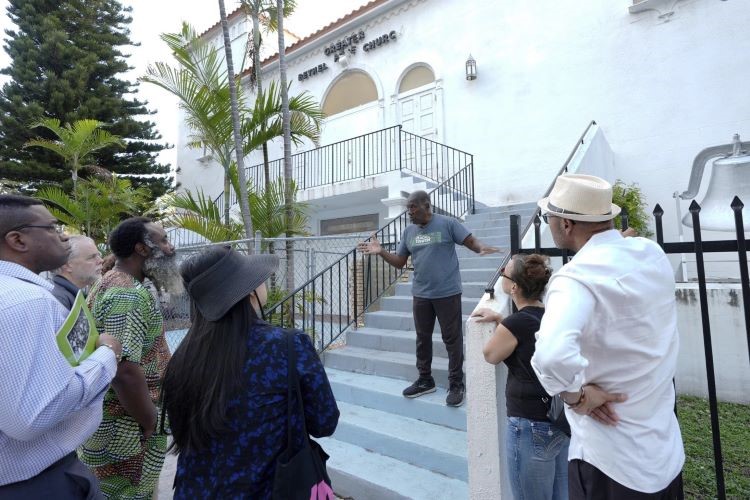
TALLAHASSEE, Fla. (AP) — Buried among Florida’s manicured golf courses and sprawling suburbs are the artifacts of its slave-holding past: the long-lost cemeteries of enslaved people, the statutes of Confederate soldiers that still stand watch over town squares, the old plantations turned into modern subdivisions that bear the same name. But many students aren’t learning that kind of Black history in Florida classrooms.
In an old wooden bungalow in Delray Beach, Charlene Farrington and her staff gather groups of teenagers on Saturday mornings to teach them lessons she worries that public schools won’t provide. They talk about South Florida’s Caribbean roots, the state’s dark history of lynchings, how segregation still shapes the landscape and how grassroots activists mobilized the Civil Rights Movement to upend generations of oppression.
“You need to know how it happened before so you can decide how you want it to happen again,” she told her students as they sat as their desks, the morning light illuminating historic photographs on the walls.
Florida students are giving up their Saturday mornings to learn about African American history at the Spady Cultural Heritage Museum in Delray Beach and in similar programs at community centers across the state. Many are supported by Black churches, which for generations have helped forge the cultural and political identity of their parishioners.
Learn about Black history from our online galleries.
Comments Are Welcome
Note: We moderate submissions in order to create a space for meaningful dialogue, a space where museum visitors – adults and youth –– can exchange informed, thoughtful, and relevant comments that add value to our exhibits.
Racial slurs, personal attacks, obscenity, profanity, and SHOUTING do not meet the above standard. Such comments are posted in the exhibit Hateful Speech. Commercial promotions, impersonations, and incoherent comments likewise fail to meet our goals, so will not be posted. Submissions longer than 120 words will be shortened.
See our full Comments Policy here.