Ferguson Police Seek To Restore Trust With New Initiative
Share
Explore Our Galleries









Breaking News!
Today's news and culture by Black and other reporters in the Black and mainstream media.
Ways to Support ABHM?
By the St. Louis Post-Dispatch, the Huffington Post
FERGUSON, Mo. (AP) — Police in Ferguson are vowing to walk the streets and talk to residents more often as part of an effort to repair frayed relations with the community more than a year after the fatal shooting of Michael Brown.
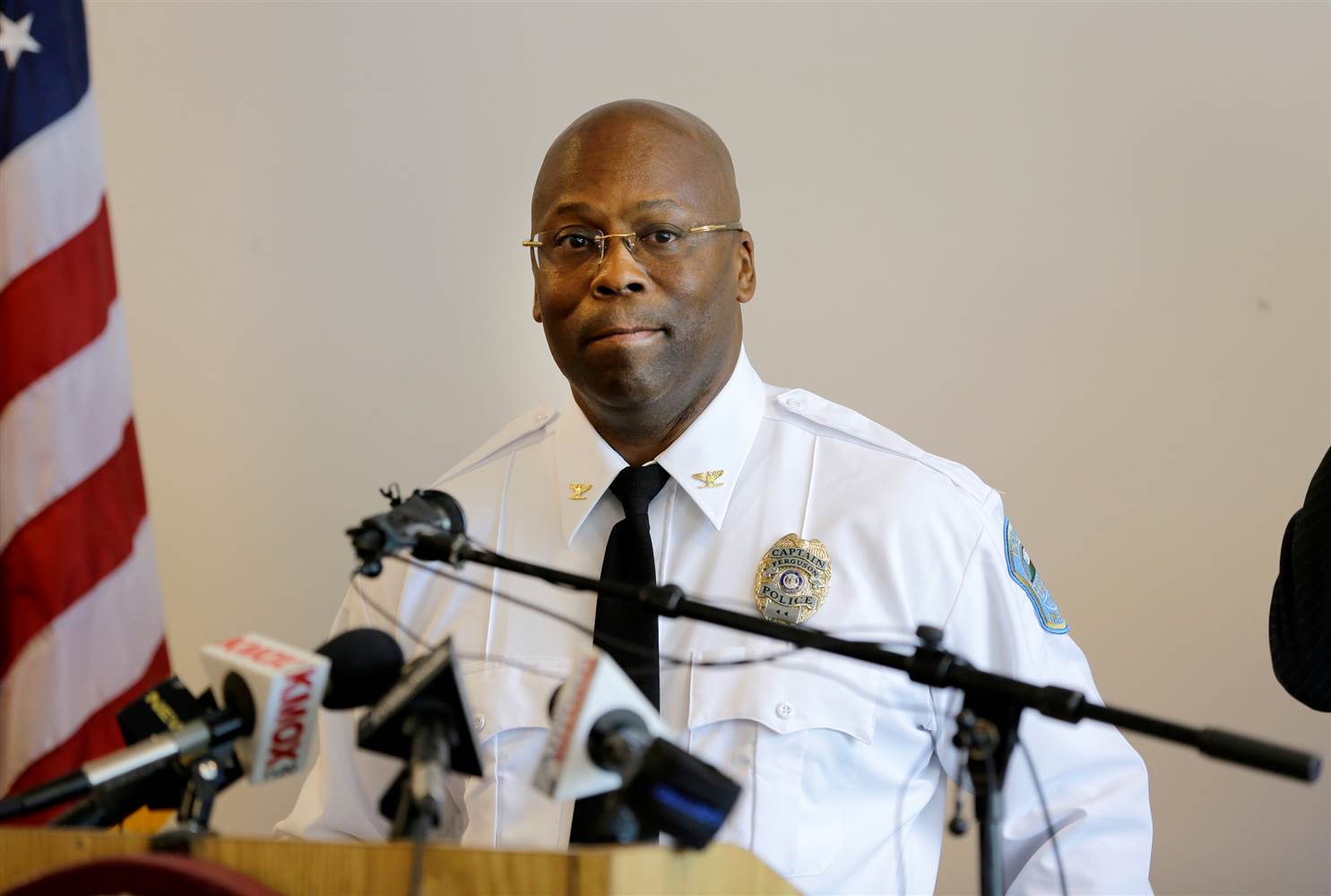
Ferguson Interim Police Chief Andre Anderson
About 130 people turned out Saturday at Greater Grace Church for the inaugural presentation of the neighborhood policing plan, the St. Louis Post-Dispatch reports. The presentation, the first in a series, comes as the St. Louis suburb works to rebuild trust after Brown, who was black, was shot to death by white Ferguson police officer Darren Wilson in August 2014 during a confrontation in the street.
The Ferguson neighborhood policing program calls for teams of officers to be assigned to a specific area, where they would build relationships with residents and businesses.
“We want to get the community more involved in our efforts to develop a better relationship,” Ferguson Interim Police Chief Andre Anderson said at the meeting. “We know we can’t do it without the community.”
Anderson, who became interim police chief in July, said his program was based on old-style policing in which officers would walk the streets and engage residents in conversations.
“I think we are on the right track,” he said. “The reality is that the police department can’t do it alone.”…
In a question-and-answer session, Rod Winterberg, 70, wanted to know if police had enough staff to deal with crime in the city. His wife, Sharon Winterberg, 73, held out a piece of paper that listed six different times guns had gone off in their neighborhood since Sept. 12.
Other residents voiced concerns about how they said some officers continued to treat residents roughly despite assurances of change.
“Culture takes times to change,” Anderson told the audience, which was about equally split between whites and African-Americans. “It’s slow. Training is going to help develop better relationships with officers.”…
The goal of Saturday’s meeting was to jumpstart community involvement in the new policing initiative. Volunteers drawn from the event will form a steering committee that will hold five monthly meetings — starting in January — to draft a plan on how to implement the community policing plan.
Read the full article here
Red more Breaking News here.
Comments Are Welcome
Note: We moderate submissions in order to create a space for meaningful dialogue, a space where museum visitors – adults and youth –– can exchange informed, thoughtful, and relevant comments that add value to our exhibits.
Racial slurs, personal attacks, obscenity, profanity, and SHOUTING do not meet the above standard. Such comments are posted in the exhibit Hateful Speech. Commercial promotions, impersonations, and incoherent comments likewise fail to meet our goals, so will not be posted. Submissions longer than 120 words will be shortened.
See our full Comments Policy here.