F.B.I. Violated Surveillance Program Rules After George Floyd Protests and Jan. 6 Attack
Share
Explore Our Galleries









Breaking News!
Today's news and culture by Black and other reporters in the Black and mainstream media.
Ways to Support ABHM?
Charlie Savage, The New York Times
The bureau made changes after the newly revealed violations of rules for querying messages intercepted under an expiring warrantless surveillance law.
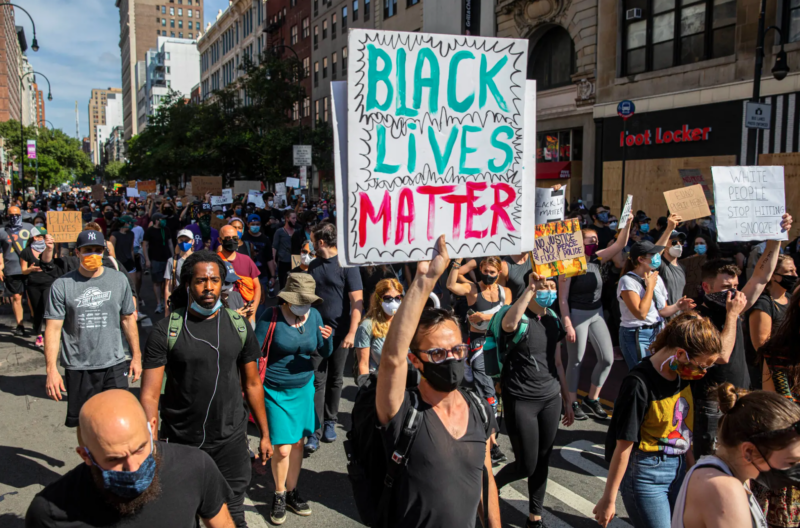
F.B.I. analysts improperly used a warrantless surveillance program to search for information about hundreds of Americans who came under scrutiny in connection with two politically charged episodes of civil unrest: the protests after the 2020 police killing of George Floyd and the Jan. 6, 2021, attack on the Capitol, a newly declassified court ruling shows.
While the F.B.I. has tightened restrictions since then, the disclosure of the misuses is likely to provide fodder to critics of the program as the Biden administration seeks to persuade Congress to renew it.
The surveillance program, known as Section 702, empowers the government to collect, without a warrant and from American companies like Google and AT&T, the communications of foreigners abroad who are targeted for intelligence purposes — even when they are talking with or about Americans.
Intelligence and law enforcement officials can search the database of communications intercepted under Section 702 using the names or other identifiers of Americans, but only under certain circumstances. The F.B.I. has repeatedly failed to comply with those limits, leading to court scrutiny.
[…]
In June 2020 … an [FBI] official searched the repository using a batch of 133 identifiers of people arrested “in connection with civil unrest and protests between approximately May 30 and June 18, 2020,” to determine whether there was any counterterrorism-related information in the repository about them.
That period corresponds to the nationwide Black Lives Matter protests after the killing of Mr. Floyd in Minneapolis, some of which descended into riots. The F.B.I. initially defended the queries as compliant, but the Justice Department apparently disagreed.
Learn more about this issue in the original article.
Read more on what has happened since George Floyd’s death in this special news series article.
Find more Breaking News here.
Comments Are Welcome
Note: We moderate submissions in order to create a space for meaningful dialogue, a space where museum visitors – adults and youth –– can exchange informed, thoughtful, and relevant comments that add value to our exhibits.
Racial slurs, personal attacks, obscenity, profanity, and SHOUTING do not meet the above standard. Such comments are posted in the exhibit Hateful Speech. Commercial promotions, impersonations, and incoherent comments likewise fail to meet our goals, so will not be posted. Submissions longer than 120 words will be shortened.
See our full Comments Policy here.