Don’t Be Fooled: Trump’s J6 Pardons Are All About Race
Share
Explore Our Galleries









Breaking News!
Today's news and culture by Black and other reporters in the Black and mainstream media.
Ways to Support ABHM?
By Keith Boykin, Word in Black
If there was ever any doubt about the 2024 election, let it be known now that it was not about law and order — it was about white supremacy.
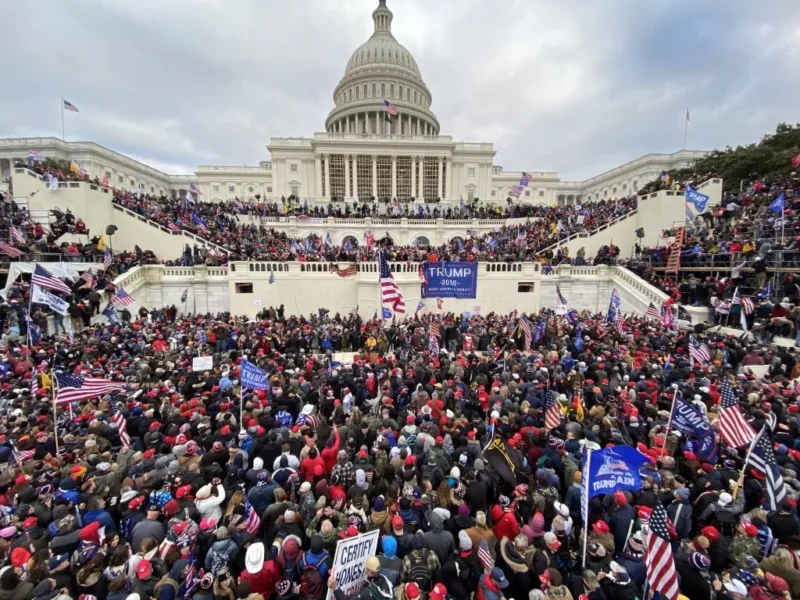
Convicted felon Donald Trump has granted clemency to every criminal involved in the January 6 insurrection to overthrow the U.S. government, including those who attacked police officers.
If there was ever any doubt about the 2024 election, let it be known now that it was not about law and order; it was about white supremacy.
More than 1,200 people have been convicted of January 6-related crimes, including 200 who pleaded guilty to assaulting law enforcement officers. And for those who haven’t been convicted yet, Trump ordered the attorney general to dismiss about 450 cases now pending before judges.
Although the Constitution prohibits treason, Trump’s action virtually nullifies the spirit of the law and establishes a dangerous precedent that whenever white people don’t like the outcome of an election, they can literally attack their own government by force and be forgiven for it.
Yes, this was about race.
The violent insurrection, the attacks on police officers, the targeting of Black election workers, and the attempts to throw out hundreds of thousands of Black votes in Atlanta, Philadelphia, Detroit, and Milwaukee were all a part of a coordinated campaign to protect the interests of white America in our two-tiered system of justice.
Just last week, even JD Vance was arguing against pardons for the people who attacked Metropolitan and Capitol Police officers. “If you committed violence on that day, obviously you shouldn’t be pardoned,” Vance told Fox News. So much for that principle.
Sadly, Trump’s pardons are not an isolated event in American history. By pardoning these thugs and labeling them “hostages,” he continues a long and tragic tradition of sweeping the interests of Black people under the rug to protect a misplaced sense of white victimhood.
Read the rest of Boykin’s compelling argument.
Learn about the long and tragic history of being Black in America.
Comments Are Welcome
Note: We moderate submissions in order to create a space for meaningful dialogue, a space where museum visitors – adults and youth –– can exchange informed, thoughtful, and relevant comments that add value to our exhibits.
Racial slurs, personal attacks, obscenity, profanity, and SHOUTING do not meet the above standard. Such comments are posted in the exhibit Hateful Speech. Commercial promotions, impersonations, and incoherent comments likewise fail to meet our goals, so will not be posted. Submissions longer than 120 words will be shortened.
See our full Comments Policy here.