Confronting Implicit Bias in the New York Police Department
Share
Explore Our Galleries









Breaking News!
Today's news and culture by Black and other reporters in the Black and mainstream media.
Ways to Support ABHM?
By Al Baker, The New York Times
In policing, the consequences of such bias can be dire. If officers rely on stereotypes instead of facts, routine encounters can escalate or turn deadly.
Since the killings of Eric Garner on Staten Island and Michael Brown in Ferguson, Mo., in 2014, and numerous other deadly encounters between law enforcement officers and civilians, the police — from Seattle to New Orleans to Hutchinson, Kan. — have strained to acknowledge and address the biases that roil, sometimes unconsciously, their interactions with the public.
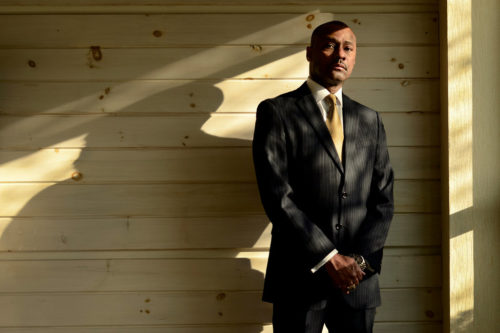
Noble L. Wray, a former police chief in Madison, Wis., is a trainer for Fair and Impartial Policing, a Florida company that is conducting implicit bias workshops for the New York Police Department.
(Credit
Heather Ainsworth for The New York Times)
This year, the New York Police Department began a training program focused on implicit bias that is one of the pillars of the de Blasio administration’s ongoing police reform efforts. It will run through next year, and all members of the department will be trained as part of a $4.5 million contract with Fair and Impartial Policing, a Florida company that has emerged as a leading provider of such training.
It is one of the biggest contracts awarded to the for-profit training company, and no one can be certain of its effectiveness. There are no standards for its curriculum and no track record for assessing whether officers or departments successfully channel the training into their work….
But Patricia G. Devine, a professor of psychology at the University of Wisconsin who runs a research laboratory on prejudice, said she was troubled by the spread of such training in the absence of probing, objective research. She said more study of officers’ unintentional biases is necessary to evaluate how training can impact their behaviors. Additional data is needed, she said, to determine if officers retain what they are taught and if civilians are benefiting from fairer policing.
“You could have the best of intentions and you could do something that you think intuitively makes sense, but it can and often does backfire; it makes things worse,” said Dr. Devine, who refers to the training as “bias habit training” and who is studying its effect on officers in Michigan.
Read full article here.
Read more Breaking News here.
View more galleries from the ABHM here.
Comments Are Welcome
Note: We moderate submissions in order to create a space for meaningful dialogue, a space where museum visitors – adults and youth –– can exchange informed, thoughtful, and relevant comments that add value to our exhibits.
Racial slurs, personal attacks, obscenity, profanity, and SHOUTING do not meet the above standard. Such comments are posted in the exhibit Hateful Speech. Commercial promotions, impersonations, and incoherent comments likewise fail to meet our goals, so will not be posted. Submissions longer than 120 words will be shortened.
See our full Comments Policy here.