CNN Highlights Living While Black in Milwaukee
Share
Explore Our Galleries









Breaking News!
Today's news and culture by Black and other reporters in the Black and mainstream media.
Ways to Support ABHM?
By Reggie Jackson, milwaukeeindependent.com
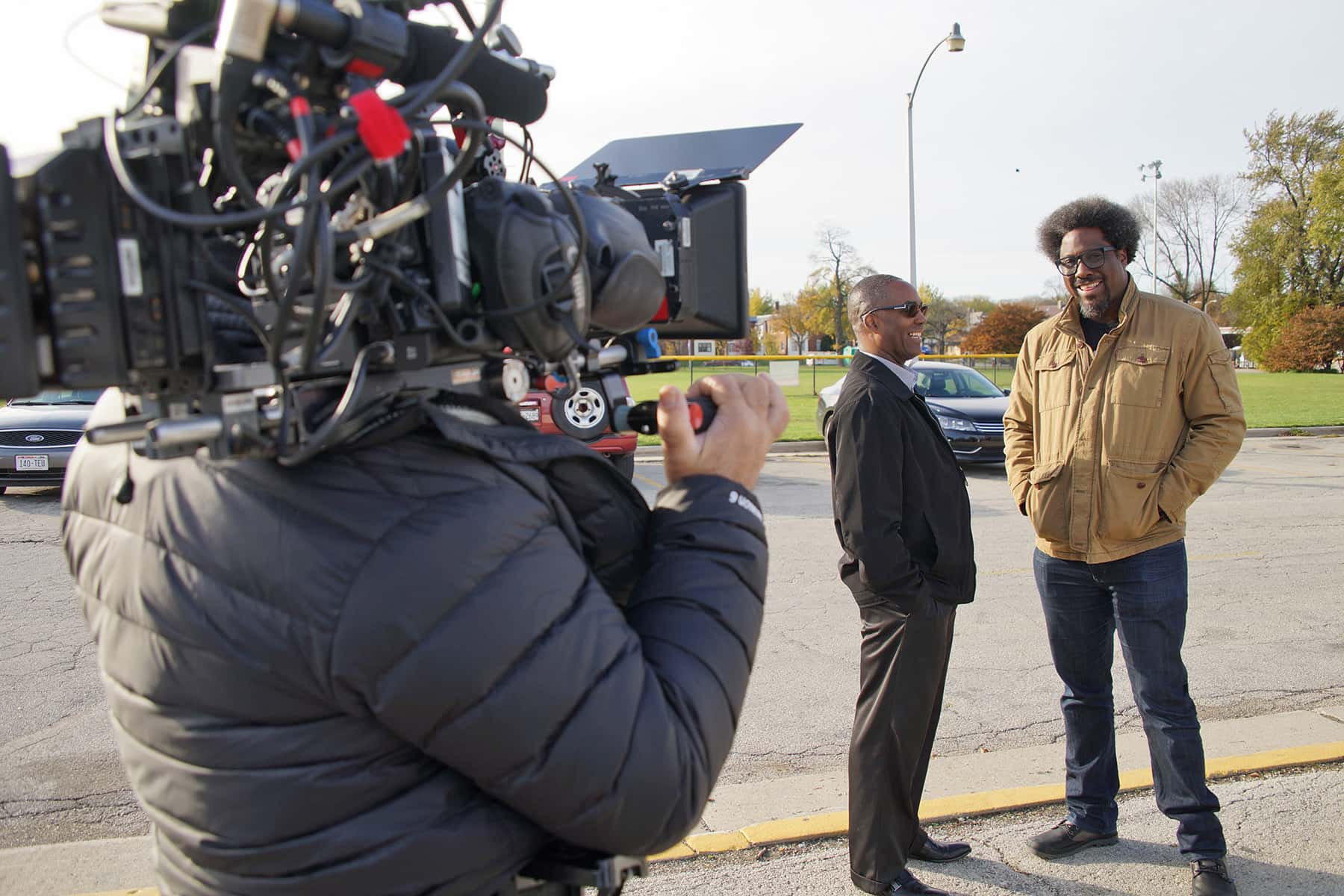
Kamau Bell interviews Reggie Jackson in Sherman Park, Milwaukee WI, about “living while black” and the uprising in this neighborhood. Credit: Lee Matz, milwaukeeindependent.com
[A CNN crew] came to Milwaukee for a few days last October to film the segment. They interviewed me in Sherman Park, discussing the civil unrest of August 2016. I talked about the events and issues leading up to the incident that arose after the shooting death of Sylville Smith. I wrote an article about the topic back during the second day of the unrest.…
I have waited anxiously over the past eight months for the program to be completed. when it finally aired on national television, many around the community asked me about the topics I explored with CNN when they came to Milwaukee. As I have done consistently for the past few years, my main public presentations are designed to contextualized the history of segregation in Milwaukee. Unfortunately, little has changed since the events that brought national – and international – media attention to the city in 2016.
W. Kamau Bell and his colleagues traveled around the Milwaukee speaking to multiple people from the community about the experiences of blacks….
The response to the #livingwhileblack program was very positive, based on the feedback I received during and after the screening at No Studios. Many expressed happiness that the issues they face regularly in Milwaukee were placed on a national stage.
Read full article here.
See also “Our Museum’s Response to Milwaukee’s Recent Unrest” here
Read more Breaking News here.
Comments Are Welcome
Note: We moderate submissions in order to create a space for meaningful dialogue, a space where museum visitors – adults and youth –– can exchange informed, thoughtful, and relevant comments that add value to our exhibits.
Racial slurs, personal attacks, obscenity, profanity, and SHOUTING do not meet the above standard. Such comments are posted in the exhibit Hateful Speech. Commercial promotions, impersonations, and incoherent comments likewise fail to meet our goals, so will not be posted. Submissions longer than 120 words will be shortened.
See our full Comments Policy here.