Candyman Is the First No. 1 Film Directed by a Black Woman
Share
Explore Our Galleries









Breaking News!
Today's news and culture by Black and other reporters in the Black and mainstream media.
Ways to Support ABHM?
By Maiysha Kai TheRoot.com
Directed and co-scripted by Nia DaCosta, the horror reboot grossed over $22.3 million in its opening weekend.
Neither the Delta variant, significant delays nor mixed reviews could keep the Candyman from dominating the box office in the opening weekend of his horrifying return. Almost 30 years after the original film traumatized a generation in 1992, its reboot, directed by Little Woods’ Nia DaCosta, grossed $22,370,00 in its initial domestic weekend, making DaCosta the first Black woman to helm a No. 1, according to IndieWire.
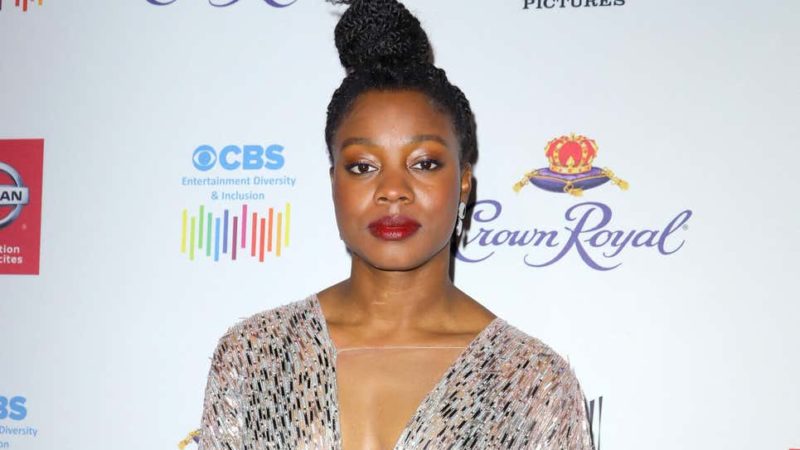
Photo: JC Olivera (Getty Images)
IndieWire primarily interpreted the film’s opening success in the context of a slowly rebounding box office—Candyman was memorably delayed a year, as DaCosta and Jordan Peele’s Monkeypaw Productions insisted it open in theaters. However, the outlet also notes that the weekend’s gross exceeded “the lowball projection of $15 million by nearly 50 percent.” Candyman is estimated to have been produced on a budget of $25 million.
In the buildup to Candyman’s long-awaited opening, DaCosta, who penned the script along with producer Peele and Monkeypaw President Win Rosenfeld, has often been sidelined in mainstream media coverage that centered Peele as the fuel behind the reboot. However, the opening weekend triumph cements DaCosta as the first Black female director behind a No. 1 film and possibly the first to co-write one—Girls Trip’s Tracy Oliver being the first to write a $100 million-grossing film. Of course, this moment also likely wouldn’t be possible without the box office success of Ava DuVernay (Selma, A Wrinkle in Time) and Gina Prince-Blythewood (Love and Basketball), whose offerings opened in second place and have continued to pave the way for more Black women in the director’s chair. “DaCosta has broken new ground,” IndieWire writes.
Read the full article here.
To learn more about other Black female leaders in film here.
More Breaking News here.
Comments Are Welcome
Note: We moderate submissions in order to create a space for meaningful dialogue, a space where museum visitors – adults and youth –– can exchange informed, thoughtful, and relevant comments that add value to our exhibits.
Racial slurs, personal attacks, obscenity, profanity, and SHOUTING do not meet the above standard. Such comments are posted in the exhibit Hateful Speech. Commercial promotions, impersonations, and incoherent comments likewise fail to meet our goals, so will not be posted. Submissions longer than 120 words will be shortened.
See our full Comments Policy here.