California panel OKs reparations limit for slave descendants
Share
Explore Our Galleries









Breaking News!
Today's news and culture by Black and other reporters in the Black and mainstream media.
Ways to Support ABHM?
By Associated Press, TheGrio
“The vote Tuesday split 5-4, and the hours-long debate was at times testy and emotional
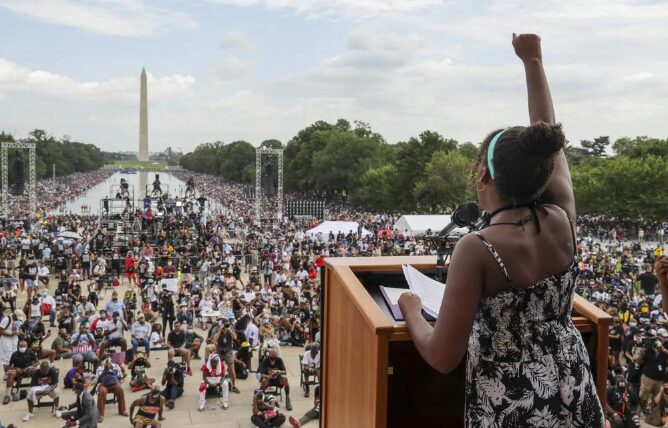
California’s first-in-the-nation task force on reparations has decided to limit state compensation to the descendants of free and enslaved Black people who were in the U.S. in the 19th century, narrowly rejecting a proposal to include all Black people regardless of lineage.
The vote Tuesday split 5-4, and the hours-long debate was at times testy and emotional. Near the end, the Rev. Amos Brown, president of the San Francisco branch of the NAACP and vice chair of the task force, pleaded with the commission to move ahead with a clear definition of who would be eligible for restitution.
Reparations efforts at the federal level have not gone anywhere, but cities and universities are taking up the issue. The mayor of Providence, Rhode Island, announced a city commission in February while the city of Boston is considering a proposal to form its own reparations commission.
Read the full story here.
Learn about some of the horrors that these reparations are for here.
More Breaking News here.
Comments Are Welcome
Note: We moderate submissions in order to create a space for meaningful dialogue, a space where museum visitors – adults and youth –– can exchange informed, thoughtful, and relevant comments that add value to our exhibits.
Racial slurs, personal attacks, obscenity, profanity, and SHOUTING do not meet the above standard. Such comments are posted in the exhibit Hateful Speech. Commercial promotions, impersonations, and incoherent comments likewise fail to meet our goals, so will not be posted. Submissions longer than 120 words will be shortened.
See our full Comments Policy here.