‘Bring More Black Farmer Voices Together’: How the Black Farmers Collective Is Growing a Black-Led Food System Rooted in Black Liberation
Share
Explore Our Galleries









Breaking News!
Today's news and culture by Black and other reporters in the Black and mainstream media.
Ways to Support ABHM?
[In a video and text] members of the Black Farmers Collective open up about discrimination in farming, the halted federal relief bill intended to help farmers of color and more.
By Jessica Moulite, theRoot.com
There’s some things that’s out there that’s happening right now that’s not allowing us to grow in the Black farming community like we should. And it starts with the banks.”
— James Edward King Jr., Black Farmers Collective, Board Treasurer
When Ray Williams first heard about the U.S. Department of Agriculture’s multibillion dollar loan forgiveness program for farmers of color meant “to remedy centuries of government discrimination,” the managing director of the Black Farmers Collective and urban farmer at Yes Farm thought it was a long time coming.
The collective’s board treasurer James King Jr., however, automatically wondered about what was going to happen next.
“Will they really truly cover the United States? [The] majority of the Black farmers are in the South and East Coast. Who in Black farming will be supported out towards the west?” asked King. “I really wanted to know what would the outreach process be, and not just saying ‘you have to fill out the paperwork.’”
But within weeks of the federal relief plan’s announcement, white farmers claimed, in so many words, reverse racism. As recently as June 23, another judge (this time in Florida) temporarily stopped any potential life-changing funds from President Biden’s COVID relief package aimed at “socially disadvantaged farmers” from ever being distributed to those who need the aid the most….
…Black farmers make up less than 2 percent of the overall farming population in the United States and have been stripped of millions of acres of land within the last century. These upsetting statistics paired with how even the USDA itself played a major role in oppressing and financially bankrupted Black farming families is one of the main driving forces behind why the Black Farmers Collective does its work.
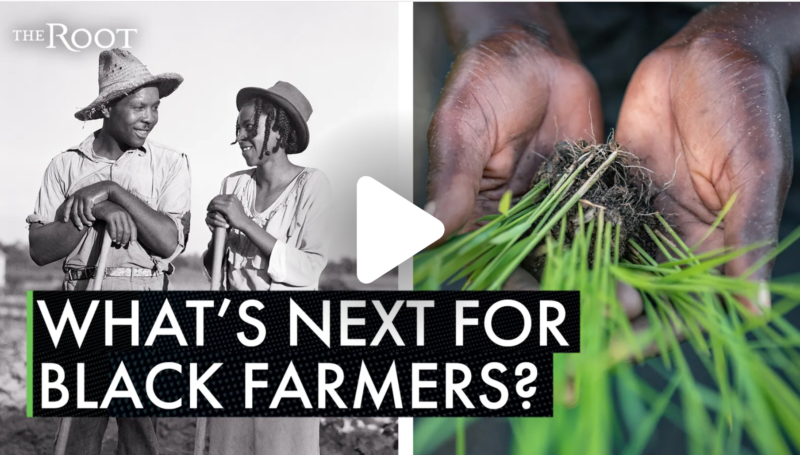
Watch in the video above as James King Jr. and Ray Williams of the Black Farmers Collective discuss everything from the discrimination faced by Black farmers to how that very same group went above and beyond to support their communities without aid during the pandemic, plus the future of the collective, and more.
Read the full article here.
Learn more about:
• Black farmers and the loss of their land here
• how Black farmers are feeding and empowering the community here and here.
More Breaking News here.
Comments Are Welcome
Note: We moderate submissions in order to create a space for meaningful dialogue, a space where museum visitors – adults and youth –– can exchange informed, thoughtful, and relevant comments that add value to our exhibits.
Racial slurs, personal attacks, obscenity, profanity, and SHOUTING do not meet the above standard. Such comments are posted in the exhibit Hateful Speech. Commercial promotions, impersonations, and incoherent comments likewise fail to meet our goals, so will not be posted. Submissions longer than 120 words will be shortened.
See our full Comments Policy here.