Black Suffrage: Slavery, citizenship, and securing the right to vote in Wisconsin
Share
Explore Our Galleries

Breaking News!
Today's news and culture by Black and other reporters in the Black and mainstream media.
Ways to Support ABHM?
By Milwaukee Independent

Wisconsin Historical Society
Wisconsin entered the Union as a free state in 1848, and has its share of associations with the abolitionist movement — the state Supreme Court, in what is among its most significant decisions, declared the federal Fugitive Slave Act unconstitutional in 1854, and opposition to slavery drove the genesis of the Republican Party in Ripon the same year.
But slavery was present in pre-statehood Wisconsin, and the institution writ large shaped attitudes that would impede efforts by African Americans in the state to secure their right to vote.
Understanding the history of black suffrage in Wisconsin requires reaching back to its days as part of the Northwest Territory and unpacking the little-discussed role of slavery in the Upper Midwest, University of Wisconsin-Madison professor of Afro-American studies Christy Clark-Pujara explained in a Feb. 20, 2018 talk at the Wisconsin Historical Museum. On the day of the talk, which was recorded for Wisconsin Public Television’s University Place, voters were casting ballots in a spring primary election.
Clark-Pujara discussed how French fur traders first brought enslaved African-Americans to the Midwest, and how the practice of slavery continued after the American Revolution, even though it was officially made illegal by the Northwest Ordinance. Of course, to tell this story is to push back on a misperception of slavery as an exclusively or even primarily southern institution…
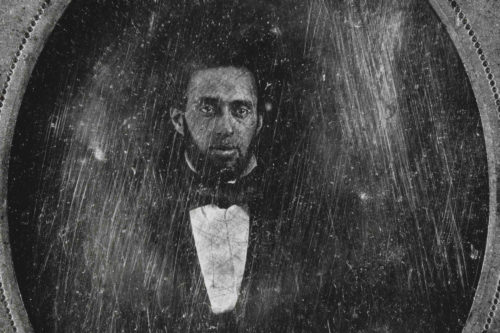
Wisconsin Historical Society
The state constitution Wisconsin adopted in 1848 barred black people from voting, but did grant it to white men regardless of their citizenship status — like newly arrived immigrants — and to Native American men who renounced tribal affiliations. This created a political structure in which, as Clark-Pujara put it, “you didn’t need citizenship, you just needed whiteness…”
Read the entire article here
Read about the Northwest Ordinance here
Read about the Dred Scott Decision here
Read more Breaking News here
View more Galleries from the ABHM here
Comments Are Welcome
Note: We moderate submissions in order to create a space for meaningful dialogue, a space where museum visitors – adults and youth –– can exchange informed, thoughtful, and relevant comments that add value to our exhibits.
Racial slurs, personal attacks, obscenity, profanity, and SHOUTING do not meet the above standard. Such comments are posted in the exhibit Hateful Speech. Commercial promotions, impersonations, and incoherent comments likewise fail to meet our goals, so will not be posted. Submissions longer than 120 words will be shortened.
See our full Comments Policy here.