Black Rag Dolls Designed to Be Abused Pulled From Store Shelves in New Jersey
Share
Explore Our Galleries









Breaking News!
Today's news and culture by Black and other reporters in the Black and mainstream media.
Ways to Support ABHM?
By Genetta M. Adams, theroot.com
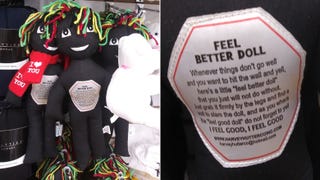
Photo: Assemblywoman Angela V. McKnight (Facebook)
Black rag dolls featuring instructions on how to abuse them were removed from the shelves of One Dollar Zone stores in New Jersey after customers and a state assemblywoman called the dolls racist.
The president of One Dollar Zone said roughly 1,000 of the dolls—called the “Feel Better Doll”—were removed from three stores in New Jersey, the Associated Press reports.
The dolls, made with black fabric and hair made of red, black, green and yellow yarn, features a tag that instructs the doll’s owner to grab it “firmly by the legs and find a wall to slam” it while yelling “I feel good. I feel good.”
After first seeing the dolls on social media, N.J. Assemblywoman Angela V. McKnight stopped by a One Dollar Zone in Bayonne, N.J.—in the district she represents—to see the dolls for herself. She posted photos of the doll on her Facebook page along with a statement calling the dolls offensive.
“Racism has no place in the world and I will not tolerate it, especially not in this district. When I saw the doll in person, I cringed and was truly disheartened by the thought of a black child being beaten by another child or an adult for pure pleasure. To have a product depict or teach children that it is OK to hit another child, regardless of race, in order to feel good is sick. Dolls should be a symbol of love, care and affection…
Read full article here
More Breaking News here
View ABHM galleries here
Comments Are Welcome
Note: We moderate submissions in order to create a space for meaningful dialogue, a space where museum visitors – adults and youth –– can exchange informed, thoughtful, and relevant comments that add value to our exhibits.
Racial slurs, personal attacks, obscenity, profanity, and SHOUTING do not meet the above standard. Such comments are posted in the exhibit Hateful Speech. Commercial promotions, impersonations, and incoherent comments likewise fail to meet our goals, so will not be posted. Submissions longer than 120 words will be shortened.
See our full Comments Policy here.