Black Patients Dress Up and Modify Speech to Reduce Bias, California Survey Shows
Share
Explore Our Galleries









Breaking News!
Today's news and culture by Black and other reporters in the Black and mainstream media.
Ways to Support ABHM?
By Annie Sciacca, Word in Black
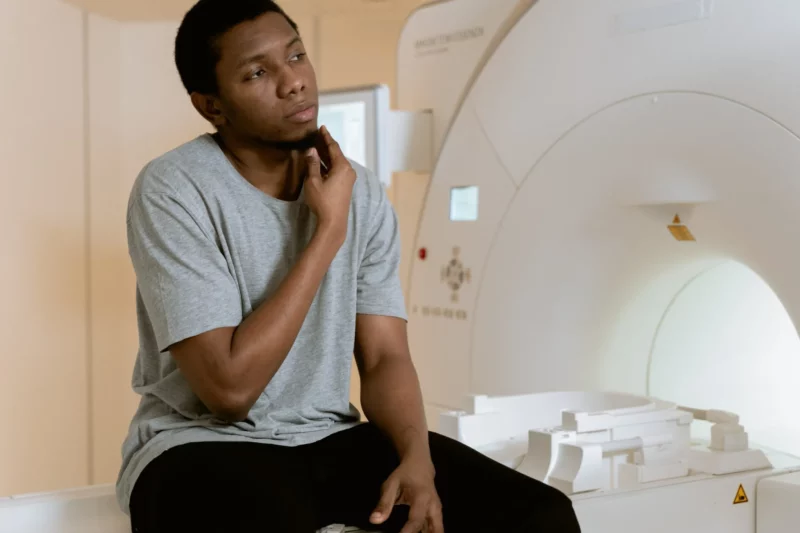
A young mother in California’s Antelope Valley bathes her children and dresses them in neat clothes, making sure they look their very best — at medical appointments. “I brush their teeth before they see the dentist. Just little things like that to protect myself from being treated unfairly,” she told researchers.
A 72-year-old in Los Angeles, mindful that he is a Black man, tries to put providers at ease around him. “My actions will probably be looked at and applied to the whole race, especially if my actions are negative,” he said. “And especially if they are perceived as aggressive.”
Many Black Californians report adjusting their appearance or behavior — even minimizing questions — all to reduce the chances of discrimination and bias in hospitals, clinics, and doctors’ offices. Of the strategies they describe taking, 32% pay special attention to how they dress; 35% modify their speech or behavior to put doctors at ease. And 41% of Black patients signal to providers that they are educated, knowledgeable, and prepared.
The ubiquity of these behaviors is captured in a survey of 3,325 people as part of an October study titled “Listening to Black Californians: How the Health Care System Undermines Their Pursuit of Good Health,” funded by the California Health Care Foundation.
[…]
“If you look at the frequency with which Black Californians are altering their speech and dress to go into a health care visit,” said Shakari Byerly, whose research firm, Evitarus, led the study, “that’s a signal that something needs to change.”
Read more of the study’s results.
For hundreds of years, Black Americans have had to prove they could be civil lest they put their lives at risk.
Comments Are Welcome
Note: We moderate submissions in order to create a space for meaningful dialogue, a space where museum visitors – adults and youth –– can exchange informed, thoughtful, and relevant comments that add value to our exhibits.
Racial slurs, personal attacks, obscenity, profanity, and SHOUTING do not meet the above standard. Such comments are posted in the exhibit Hateful Speech. Commercial promotions, impersonations, and incoherent comments likewise fail to meet our goals, so will not be posted. Submissions longer than 120 words will be shortened.
See our full Comments Policy here.