Black man choked and shocked by police died because of drugs, officers’ lawyers argue at trial
Share
Explore Our Galleries









Breaking News!
Today's news and culture by Black and other reporters in the Black and mainstream media.
Ways to Support ABHM?
Martha Bellisle, Associated Press
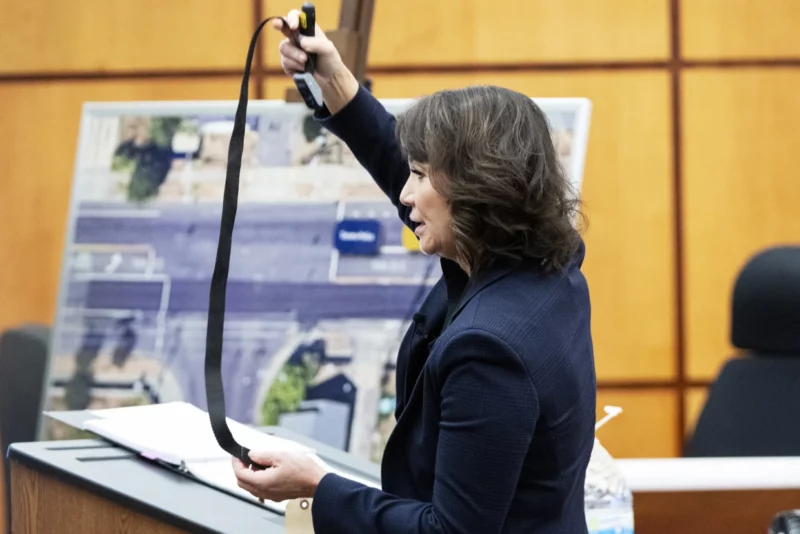
TACOMA, Wash. (AP) — Lawyers for three Washington state police officers charged in the 2020 death of a Black man told the jury Tuesday that his death was the result of drug use, not excessive force that included officers choking, shocking and holding him facedown.
Manuel Ellis was addicted to methamphetamine, and it caused him to be violent, unpredictable, and paranoid, said Wayne Fricke, who represents Tacoma police Officer Christopher Burbank.
“This is a situation where he created his own death,” Fricke said during closing arguments in the officers’ nine-week trial on murder and manslaughter charges. “It was his behavior that forced the officers to use force against him because he created a situation that required them to act.”
Fricke’s remarks followed closing arguments by special prosecutor Patty Eakes, who urged the jury to compare the officers’ statements with videos and witness testimony to determine the officers’ credibility. Eakes is prosecuting the case on behalf of the Washington Attorney General’s Office.
Ellis, who repeatedly told the officers, “Can’t breathe, sir,” died March 3, 2020, nearly three months before George Floyd’s death would spark an international outcry against police brutality. This is the first trial of officers charged in a suspect’s death since voters approved a measure in 2018 removing a requirement that prosecutors must prove police acted with malice.
Two of the Tacoma, Washington, officers — Burbank, 38, and Matthew Collins, 40 — were charged with second-degree murder and manslaughter. Timothy Rankine, 34, is charged with manslaughter.
Read about the rest of the trial here.
Unfortunately, police brutality is very present in black and brown communities across America. Click here to read a story of a victim who survived the act of police brutality.
Comments Are Welcome
Note: We moderate submissions in order to create a space for meaningful dialogue, a space where museum visitors – adults and youth –– can exchange informed, thoughtful, and relevant comments that add value to our exhibits.
Racial slurs, personal attacks, obscenity, profanity, and SHOUTING do not meet the above standard. Such comments are posted in the exhibit Hateful Speech. Commercial promotions, impersonations, and incoherent comments likewise fail to meet our goals, so will not be posted. Submissions longer than 120 words will be shortened.
See our full Comments Policy here.