Black gay community concerned monkeypox response is inadequate
Share
Explore Our Galleries









Breaking News!
Today's news and culture by Black and other reporters in the Black and mainstream media.
Ways to Support ABHM?
By Curtis Bunn, NBC News
Historic inequities in health care and current disparities in vaccine distribution have Black gay men worried they could be seeing a repeat of the response and stigma that came with the HIV/AIDS epidemic of the 1980s.
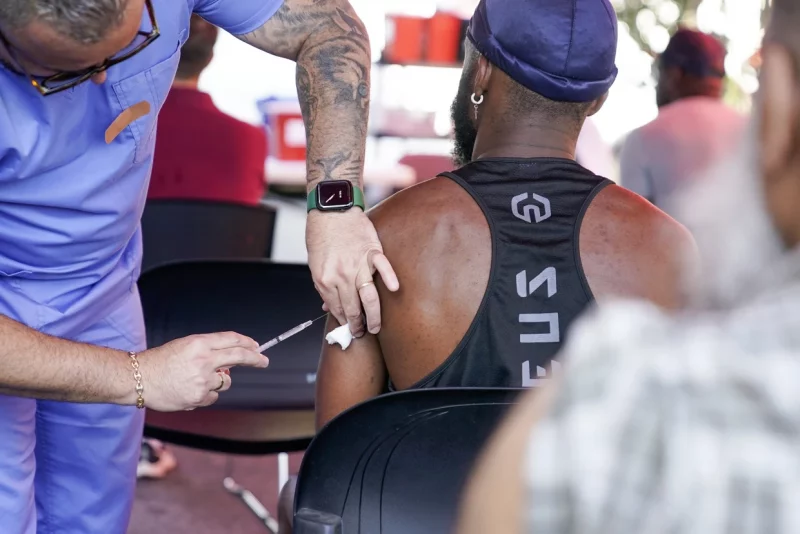
In July, a 35-year-old Black man from the Washington, D.C. area went from experiencing Covid-like symptoms to watching his body be overtaken by the aggravating, blistering boils of monkeypox. And yet, as he endured the agony and uncertainty that came with the disease, he said he had other, more pressing concerns.
The man, who asked to remain anonymous because of concerns related to the stigma associated with the disease, said he was alarmed by how difficult it was to find information on monkeypox and his doctor’s seeming dismissal of his concerns about his symptoms.
He said his case is an example of the concerning public health response to monkeypox, and, for the Black population in particular, follows a historical pattern of medical malfeasance and shortcomings.
The man said when he visited urgent care in early July, the doctor didn’t appear to take him seriously. “I asked if she was up on the latest CDC guidelines on monkeypox and she wasn’t,” he recalled. “So, she had to call the CDC to even get approval to administer me a test. She went on about how it would take an hour of paperwork and other stuff, so most doctors weren’t excited about giving the tests.”
The man, who is gay, said, “it was like a repeat performance” of some of the issues that came with the Covid pandemic, when Black people in many parts of the country had less access to treatment and vaccines, according to the Centers for Disease Control and Prevention.
Now with monkeypox, health care officials face the challenge of effectively communicating information about the spread of the outbreak without stigmatizing gay men. Public health officials interviewed by NBC News said managing that balance is critical to gaining public confidence to offset the intense mistrust of the medical establishment in the Black community. The poor response by health officials, the disparities in the vaccine rollout and the stigma associated with monkeypox have contributed to men questioning how the virus is spread — despite the data, experts say.
Learn about how some Black Americans are still struggling because of COVID-19 health disparities.
More Black news here.
Comments Are Welcome
Note: We moderate submissions in order to create a space for meaningful dialogue, a space where museum visitors – adults and youth –– can exchange informed, thoughtful, and relevant comments that add value to our exhibits.
Racial slurs, personal attacks, obscenity, profanity, and SHOUTING do not meet the above standard. Such comments are posted in the exhibit Hateful Speech. Commercial promotions, impersonations, and incoherent comments likewise fail to meet our goals, so will not be posted. Submissions longer than 120 words will be shortened.
See our full Comments Policy here.