Black Firefighters Say Lack of Promotions and Rampant Use of Racial Slurs Embody Culture of Kansas City Fire Department
Share
Explore Our Galleries









Breaking News!
Today's news and culture by Black and other reporters in the Black and mainstream media.
Ways to Support ABHM?
By Joe Jurado, TheRoot.com
One of the positives, for lack of a better word, of the renewed focus on systemic racism in America is seeing Black people across the country speaking out about the years of racist treatment they’ve tolerated in their respective fields. A group of Black firefighters in Kansas City, Mo., have spoken out about the years of racial discrimination they’ve endured in the city’s fire department.
A report by the Kansas City Star found that a pattern of systemic racism has plagued the Kansas City Fire Department in Kansas City, Mo., for decades. The report was triggered following an incident last year where Benjamin Barton, a white fire cadet, said his favorite knot was a noose, threw a rope around the neck of a Black classmate, and pulled it tight.
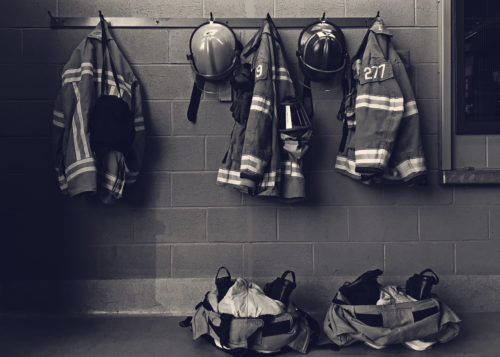
Photo: Firefighter Montreal (Shutterstock)
“I went back and sat down because I didn’t want to lose my job or anything like that since at that time, I was a probationary firefighter,” the affected firefighter told the Kansas City Star. The firefighter remained anonymous for fear of retaliation.
As word spread about the incident, many firefighters in the department called for Barton to be fired. Instead, after multiple roadblocks and union politicking, Barton was ultimately employed for several weeks after the incident and allowed to resign on his own.
“For me to take the higher road for it and still not get the justice that I felt was satisfactory to me was actually kind of heartbreaking,” the impacted firefighter told the Star.
The firefighter said that Barton initially tried to tell him that he didn’t know what he did was racist but the firefighter wasn’t trying to hear that. “Man, it’s 2019. Who in their right mind can live in America and not know what a noose represents to a Black person?” the firefighter said.
“I know people live under rocks, but that’s got to be like the deepest rock in the world.”
According to the 30 current and former Black firefighters interviewed by the Star, the lack of consequences for what was a blatantly racist act is unsurprising. “If (you’re) not the right color, not the right sex, you are going to have a problem,” Therese Brown, a retired Black firefighter, told the Star.
Records obtained by the Star show that half of the city’s fire crews don’t have a single black firefighter among them. Black firefighters are also overlooked for promotions in high-ranking positions; of the 48 highest-ranking firefighters, only three are Black.
Read the full article here.
Learn more about current roadblocks for the Black community here.
More Breaking News here
Comments Are Welcome
Note: We moderate submissions in order to create a space for meaningful dialogue, a space where museum visitors – adults and youth –– can exchange informed, thoughtful, and relevant comments that add value to our exhibits.
Racial slurs, personal attacks, obscenity, profanity, and SHOUTING do not meet the above standard. Such comments are posted in the exhibit Hateful Speech. Commercial promotions, impersonations, and incoherent comments likewise fail to meet our goals, so will not be posted. Submissions longer than 120 words will be shortened.
See our full Comments Policy here.