An old Virginia plantation, a new owner and a family legacy unveiled
Share
Explore Our Galleries









Breaking News!
Today's news and culture by Black and other reporters in the Black and mainstream media.
Ways to Support ABHM?
By Joe Heim, The Washington Post
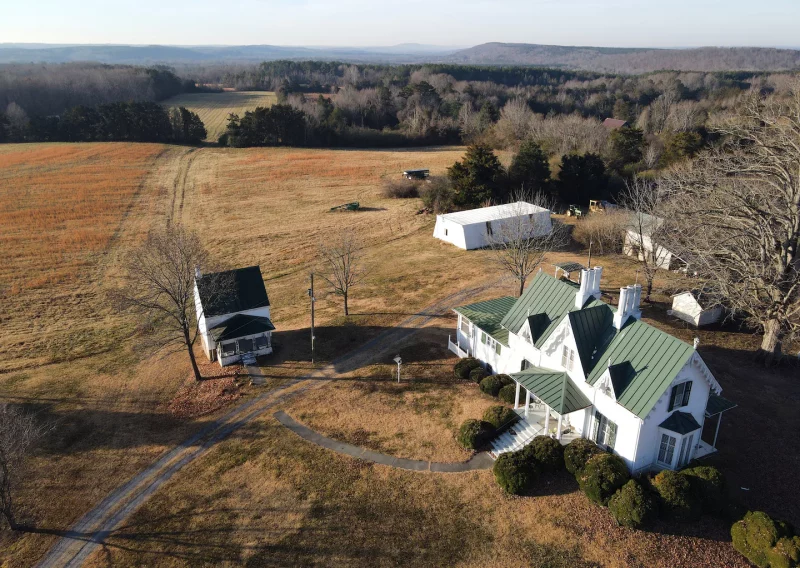
GRETNA, Va. — There was so much Fredrick Miller didn’t know about the handsome house here on Riceville Road.
He grew up just a half-mile away and rode past it on his school bus every day. It was hard to miss. The home’s Gothic revival gables, six chimneys, diamond-paned windows and sweeping lawn were as distinctive a sight as was to be seen in this rural southern Virginia community. But Miller, 56, an Air Force veteran who now lives in California, didn’t give it much thought. He didn’t know it had once been a plantation or that 58 people had once been enslaved there. He never considered that its past had anything to do with him.
Two years ago, when his sister called to say the estate was for sale, he jumped on it. He’d been looking, pulled home to the place he left at 18. His roots were deep in this part of Pittsylvania County, and he wanted a place where his vast extended family, many of whom still live nearby, could gather.
The handsome house set on a rise had a name, it turned out. Sharswood. And Sharswood had a history. And its history had everything to do with Miller.
Read the full article here.
More Breaking News here.
Comments Are Welcome
Note: We moderate submissions in order to create a space for meaningful dialogue, a space where museum visitors – adults and youth –– can exchange informed, thoughtful, and relevant comments that add value to our exhibits.
Racial slurs, personal attacks, obscenity, profanity, and SHOUTING do not meet the above standard. Such comments are posted in the exhibit Hateful Speech. Commercial promotions, impersonations, and incoherent comments likewise fail to meet our goals, so will not be posted. Submissions longer than 120 words will be shortened.
See our full Comments Policy here.