America’s nonviolent civil rights movement was considered uncivil by critics at the time
Share
Explore Our Galleries


Breaking News!
Today's news and culture by Black and other reporters in the Black and mainstream media.
Ways to Support ABHM?
By Peniel E. Joseph, The Washington Post
American history is rooted in the political brawls, fistfights, and debates that culminated in a revolutionary war for independence and a civil war that ushered in a new democratic political order built on the blood of over 600,000 dead. As we celebrate July 4, it’s worth remembering that freedoms now taken for granted have come at a high cost in comparison to the rhetorical wars being waged by partisans in our increasingly divided and divisive political culture.

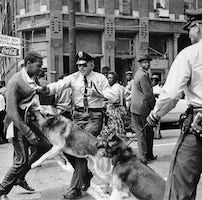
In this May 3rd, 1963, photograph, a 17-year-old civil rights demonstrator, defying an anti-parade ordinance of Birmingham, Ala., is attacked by a police dog. (Bill Hudson/AP)
Political incivility in the Age of Trump continues to stir national controversy, with conservatives accusing progressives of going too far in their condemnation of MAGA supporters and Trump administration officials, some of whom were publicly heckled as they tried to eat at restaurants in the nation’s capital….
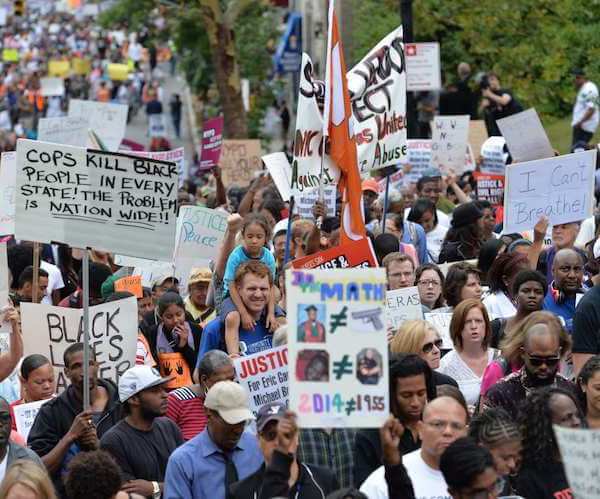
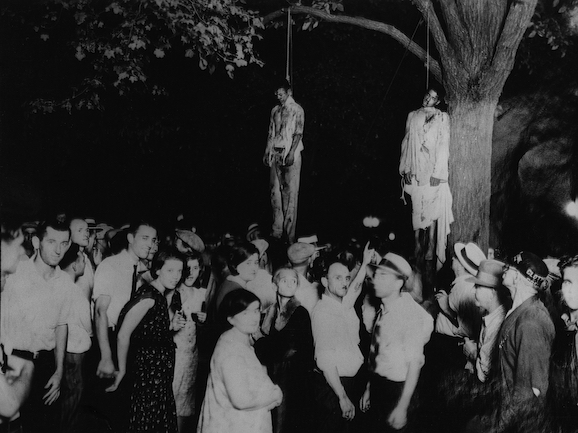
Our current national turmoil over the merits and measure of civility in our political discourse echoes debates about the best tactics to ensure black citizenship, racial justice and equality during the heyday of the black freedom struggle.
Although the civil rights period is largely recognized as one of the proudest eras in American history, this wasn’t always the case.
Civil rights demonstrators, activists and organizations utilized robust political tactics, stinging criticism and demonstrations that were designed to create upheaval in American society….
Black Lives Matter protests, March for Our Lives rallies, #MeToo demonstrations and rallies on behalf of immigrants, women and LGBTQ communities represent the contemporary face of social-justice movements in America, ones that build on, while transcending, an earlier movement that we erroneously romanticize as passive to our enduring national detriment.
Read the full article here.
Read more Breaking News here.
View more galleries from the ABHM here.
Comments Are Welcome
Note: We moderate submissions in order to create a space for meaningful dialogue, a space where museum visitors – adults and youth –– can exchange informed, thoughtful, and relevant comments that add value to our exhibits.
Racial slurs, personal attacks, obscenity, profanity, and SHOUTING do not meet the above standard. Such comments are posted in the exhibit Hateful Speech. Commercial promotions, impersonations, and incoherent comments likewise fail to meet our goals, so will not be posted. Submissions longer than 120 words will be shortened.
See our full Comments Policy here.