After Changing the Rules of Engagement, Senate Republicans Vote Neil Gorsuch Onto the U.S. Supreme Court
Share
Explore Our Galleries









Breaking News!
Today's news and culture by Black and other reporters in the Black and mainstream media.
Ways to Support ABHM?
From: Colorlines
By: Deepa Iyer
In the article “After Changing the Rules of Engagement, Senate Republicans Vote Neil Gorsuch Onto the U.S. Supreme Court,” contributing writer Deepa Iyer talks about the reaction of racial justice, women’s rights, and LGBTQ organizations to the confirmation of the 113th justice, Neil Gorsuch.
She writes:
“Democrats filibustered the nomination yesterday, denying Gorsuch supporters the 60 votes they needed to move to a final vote. In a move observers and individual lawmakers have characterized as the death knell of any possible bipartisanship in the Senate, Majority Leader Mitch McConnell (R-Ky.) changed the body’s rules of Supreme Court nominations, using what is called the “nuclear option.””
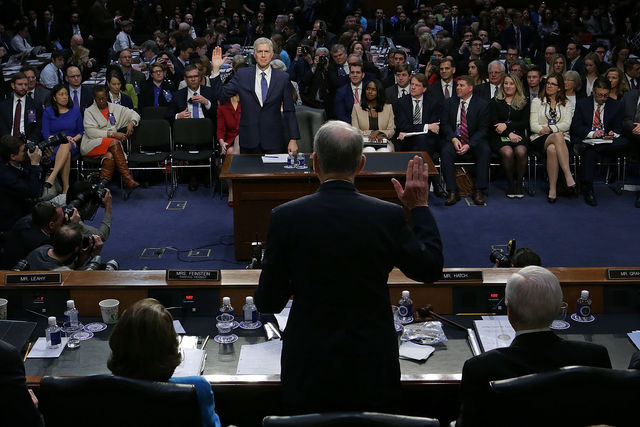
WASHINGTON, DC – MARCH 20: Senate Judiciary Committee Chairman Charles Grassley (R-IA) (back to camera) swears in Judge Neil Gorsuch during the first day of his Supreme Court confirmation hearing before the Senate Judiciary Committee in the Hart Senate Office Building on Capitol Hill March 20, 2017 in Washington, DC. Gorsuch was nominated by President Donald Trump to fill the vacancy left on the court by the February 2016 death of Associate Justice Antonin Scalia. (Photo by Alex Wong/Getty Images) Photo: Alex Wong/Getty Images
She continues:
“Civil society organizations have consistently opposed Gorsuch’s nomination for his conservative viewpoints on reproductive rights, LGBTQ equality, and criminal justice.”
Read More About Past Supreme Court Decisions That Changed History here.
Visit our Breaking News Page here.
Comments Are Welcome
Note: We moderate submissions in order to create a space for meaningful dialogue, a space where museum visitors – adults and youth –– can exchange informed, thoughtful, and relevant comments that add value to our exhibits.
Racial slurs, personal attacks, obscenity, profanity, and SHOUTING do not meet the above standard. Such comments are posted in the exhibit Hateful Speech. Commercial promotions, impersonations, and incoherent comments likewise fail to meet our goals, so will not be posted. Submissions longer than 120 words will be shortened.
See our full Comments Policy here.