Affirmative Action Was Banned at Two Top Universities. They Say They Need It.
Share
Explore Our Galleries









Breaking News!
Today's news and culture by Black and other reporters in the Black and mainstream media.
Ways to Support ABHM?
By Stephanie Saul, New York Times
As a Supreme Court case on college admissions nears, the California and Michigan university systems say their efforts to build diverse classes have hardly worked.
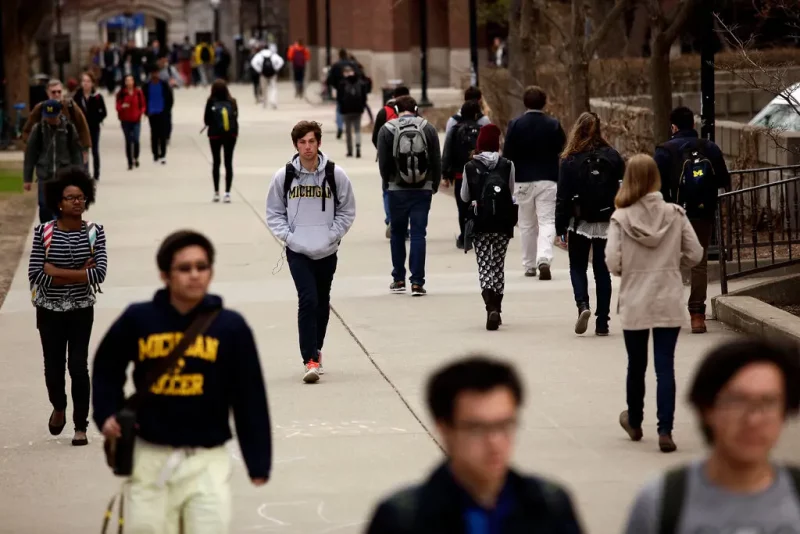
It has been more than 15 years since two of the country’s top public university systems, the University of Michigan and the University of California, were forced to stop using affirmative action in admissions.
Since then, both systems have tried to build racially diverse student bodies through extensive outreach and major financial investment, well into the hundreds of millions of dollars.
Those efforts have fallen abysmally short, the universities admitted in two amicus briefs filed this month at the Supreme Court, which is set to consider the future of affirmative action in college admissions this fall.
Among the data points: In 2021, the entering freshman class at the University of California, Berkeley, included 258 Black students and 27 Native American students out of a class of 6,931. That same year, Black enrollment at Michigan’s flagship campus in Ann Arbor was 4 percent, even as the university maintained a special admissions office in Detroit to recruit Black students.
The outreach programs are extremely costly. The University of California system says it has spent more than a half-billion dollars since 2004 to increase diversity among its students.
In the briefs, lawyers for the universities argue that, without affirmative action, achieving racial diversity is virtually impossible at highly selective universities.
The original article discusses the importance of affirmative action.
Even with affirmative action in place, Black student populations are low. Liz Granderson writes about the strengths and weaknesses of affirmative action laws.
Don’t forget to check out our breaking news page.
Comments Are Welcome
Note: We moderate submissions in order to create a space for meaningful dialogue, a space where museum visitors – adults and youth –– can exchange informed, thoughtful, and relevant comments that add value to our exhibits.
Racial slurs, personal attacks, obscenity, profanity, and SHOUTING do not meet the above standard. Such comments are posted in the exhibit Hateful Speech. Commercial promotions, impersonations, and incoherent comments likewise fail to meet our goals, so will not be posted. Submissions longer than 120 words will be shortened.
See our full Comments Policy here.