A North Texas school district says a book chapter by its namesake about a lynching is not appropriate for some students
Share
Explore Our Galleries









Breaking News!
Today's news and culture by Black and other reporters in the Black and mainstream media.
Ways to Support ABHM?
By Nicole Chavez and Justin Gamble, CNN
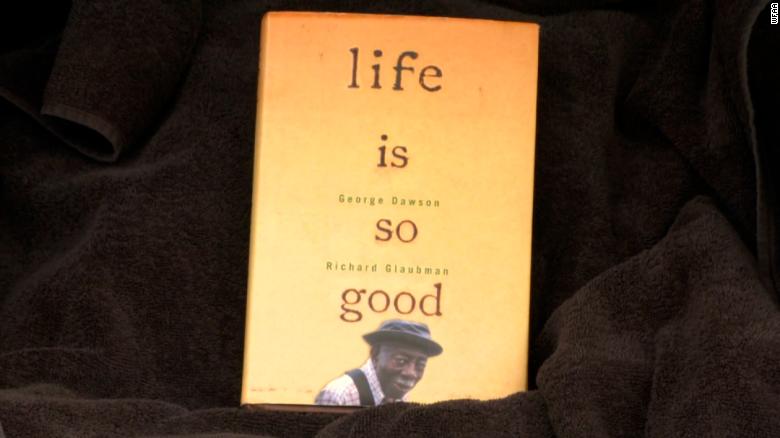
Officials at a North Texas school named after a Black man who learned to read and write when he was 98 years old has ruled that a portion of his memoir describing his best friend getting lynched is not appropriate for some students.
The Carroll Independent School District in Southlake, Texas, started evaluating the content of the book “Life is So Good” by George Dawson and Richard Glaubman this summer after a 7th grade teacher intended to add the title as a required reading for a journalism class, according to Lane Ledbetter, the district’s superintendent and a district documents obtained by CNN.
Ledbetter said on Wednesday that school officials determined one chapter of Dawson’s book was not appropriate for the students’ age group and ruled the book can only be used with “teacher-led instruction.”
A spokesman for the school district told CNN the teacher works at George Dawson Middle School. The school was named after Dawson when it opened in 2002. He earned national recognition around 2000 for championing literacy by learning to read at 98 years old.
In his book, Dawson recounts his life experiences, the interactions he had with people in the rural South as a Black man and how he eventually learned to read after joining a literacy program.
The district’s spokesman said school officials were concerned about the first chapter of Dawson’s book, which includes numerous racial epithets and references Dawson witnessing the lynching of a friend. CNN has confirmed the chapter was set in 1908 and describes Dawson, then a 10-year-old in Marshall, Texas, at a general store when he heard a commotion outside. One of his friends was accused of rape by a group of White men and Dawson witnessed him getting lynched. In the book, Dawson was adamant about his friend’s innocence.
[…]
Ledbetter, the district’s superintendent, said the school’s principal is working with the teacher to find a way to “to ensure that sensitive content is delivered in the most age-appropriate manner, while maintaining the integrity of the content of the book, the author’s intended message, and certainly honoring the legacy of Mr. Dawson.”
In his request to have the book considered as a required reading, the teacher said the first chapter was the only graphic part of the book but said “it is important to remember the trauma African Americans — including George Dawson — had to experience during this time,” according to the document obtained by CNN.
Chavez details this controversy on CNN.
Comments Are Welcome
Note: We moderate submissions in order to create a space for meaningful dialogue, a space where museum visitors – adults and youth –– can exchange informed, thoughtful, and relevant comments that add value to our exhibits.
Racial slurs, personal attacks, obscenity, profanity, and SHOUTING do not meet the above standard. Such comments are posted in the exhibit Hateful Speech. Commercial promotions, impersonations, and incoherent comments likewise fail to meet our goals, so will not be posted. Submissions longer than 120 words will be shortened.
See our full Comments Policy here.