A Landmark of Black Cinema, Restored for a New Age
Share
Explore Our Galleries









Breaking News!
Today's news and culture by Black and other reporters in the Black and mainstream media.
Ways to Support ABHM?
By Simran Hans, New York Times
The British director Horace Ové struggled to get his 1975 film, “Pressure,” made and released. Now, weeks after his death, a new restoration is celebrated in New York and London.
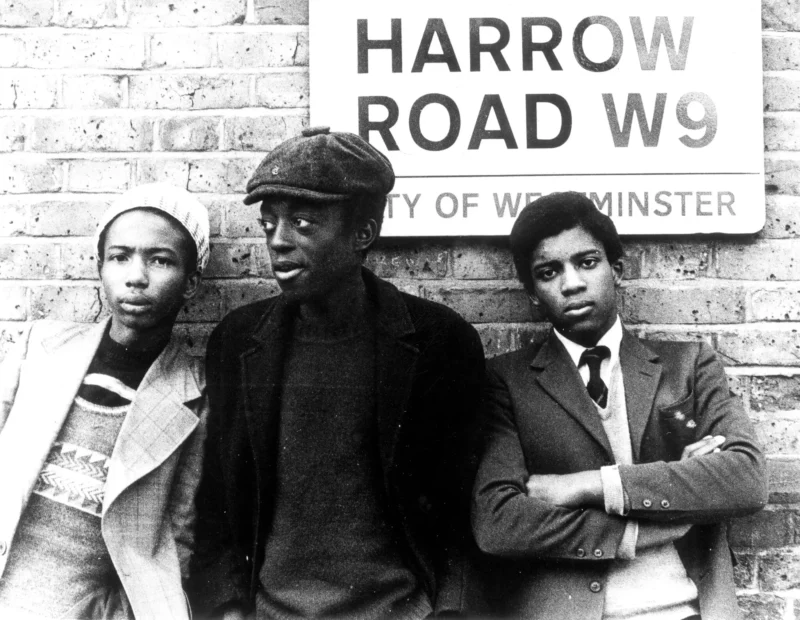
On a recent, rainy evening in London, movie fans gathered at the British Film Institute theater for a much-anticipated premiere, though the film was made nearly 50 years ago: Horace Ové’s newly restored “Pressure,” considered the first feature by a Black British director.
Ové died last month, just weeks before his film was set to be celebrated internationally with screenings at both the London and New York Film Festivals. Herbert Norville, who starred in “Pressure” when he was 15, said in a speech at the London screening that he hoped the audience saw “what it was like being Black, being British and growing up in an era where racism was rife.”
A roiling social-realist drama shot in 1974, “Pressure” follows Tony, a young Black Londoner looking for a job and a sense of belonging. He is pulled in several directions: by his activist older brother, by his pious West Indian mother and by white British society, which refuses to embrace him.
[…]
In recent years, mainstream cultural institutions including the Tate museums and the BBC have been giving work made about Black British, and specifically Caribbean, lives more attention. The restoration of “Pressure” is accompanied by a major British Film Institute retrospective, “Power to the People: Horace Ove’s Radical Vision,” though in prior decades, the director struggled for recognition from the establishment.
Find upcoming events, including those dedicated to Black cinema.
Don’t forget to stop by our breaking news page!
Comments Are Welcome
Note: We moderate submissions in order to create a space for meaningful dialogue, a space where museum visitors – adults and youth –– can exchange informed, thoughtful, and relevant comments that add value to our exhibits.
Racial slurs, personal attacks, obscenity, profanity, and SHOUTING do not meet the above standard. Such comments are posted in the exhibit Hateful Speech. Commercial promotions, impersonations, and incoherent comments likewise fail to meet our goals, so will not be posted. Submissions longer than 120 words will be shortened.
See our full Comments Policy here.