A Black Teen Is Helping Save Mississippi’s Oysters
Share
Explore Our Galleries









Breaking News!
Today's news and culture by Black and other reporters in the Black and mainstream media.
Ways to Support ABHM?
By Willy Blackmore, Word in Black
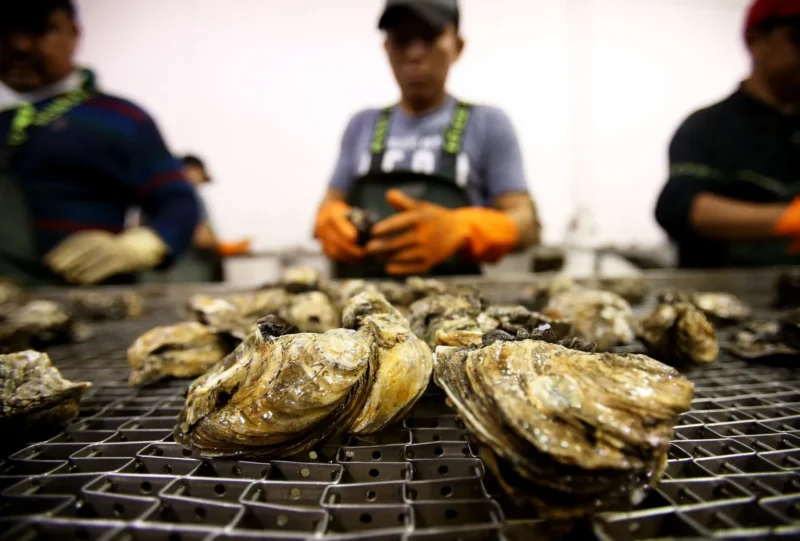
The oyster reefs off the coast of Mississippi, which filter water and help protect the mainland from powerful storms and hurricanes, have had a rough time for the better part of two decades.
The once-extensive, publicly-owned beds have been devastated by a string of both natural and man-made disasters. They range from Hurricane Katrina, which either damaged or destroyed 90% of the reefs in 2005, to the 2010 Deepwater Horizon oil spill and an Army Corps of Engineers floodwater strategy decision that triggered a freshwater intrusion into the Mississippi Sound in 2011.
Both the state and a variety of conservation groups have been trying to revive the oyster reefs, and they’re getting help from citizens too – including a Black teenage girl from Mississippi
Demi Johnson, who has been growing her own oysters off a Biloxi pier since she was in the seventh grade. She was recently in Washington, D.C., where she won a Slingshot Challenge Significant Achievement Award from the National Geographic Society for her conservation work, which includes a $1000 grant to help fund her oyster-growing efforts.
“I found out that oyster reefs and gardens are endangered, so I felt inspired to help the environment, to give back to it,” Johnson said in an interview with a local TV news station last year. As of March, she’s raised over 1,000 oysters.
The original article has more details.
Comments Are Welcome
Note: We moderate submissions in order to create a space for meaningful dialogue, a space where museum visitors – adults and youth –– can exchange informed, thoughtful, and relevant comments that add value to our exhibits.
Racial slurs, personal attacks, obscenity, profanity, and SHOUTING do not meet the above standard. Such comments are posted in the exhibit Hateful Speech. Commercial promotions, impersonations, and incoherent comments likewise fail to meet our goals, so will not be posted. Submissions longer than 120 words will be shortened.
See our full Comments Policy here.