Ellen and William Craft Make a “Crafty” Escape from Slavery
Share
Explore Our Galleries









Breaking News!
Today's news and culture by Black and other reporters in the Black and mainstream media.
Ways to Support ABHM?
From the African American Registry
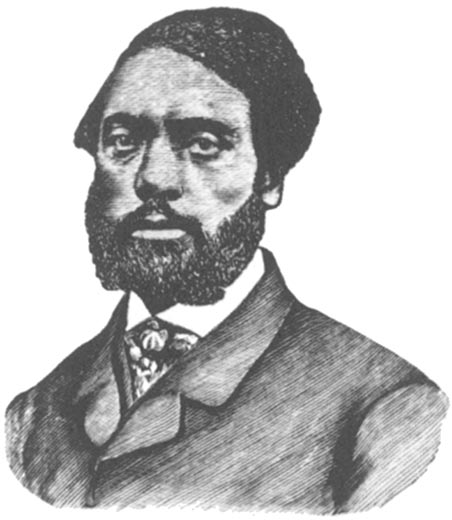
The lives of Ellen and William Craft are celebrated on this date. They were two African-American abolitionists who were known for William’s autobiographical slave narrative describing the couple’s dramatic escape from slavery.
William and Ellen Craft’s self-liberation is one of the most remarkable escapes ever recorded in a historic slave narrative.
Ellen was born in 1826 in Clinton, GA, to a biracial slave woman and her white master, and was so light-skinned that she was often mistaken for a member of her father’s family. This infuriated her mistress and, as a result, at age 11, Ellen was given as a wedding gift to a daughter who lived in Macon. There she met William, whom she married in 1846.
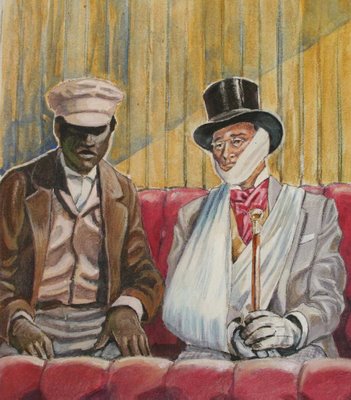
Two years later, the Crafts began to devise their escape plan, which involved Ellen posing as a white slaveholder traveling with “his” slave, William. This required several levels of deception. She cut her hair, changed her walk, and wrapped her jaw in bandages to disguise her lack of a beard. To hide her illiteracy, she wrapped her right arm in a sling to have a ready excuse for being unable to sign papers; and Craft explained all of the bandages by claiming to be an invalid traveling north to receive medical care. In this manner, the Crafts traveled from Georgia to Pennsylvania by train, steamer, and ferry without being discovered.
They arrived in Philadelphia on Christmas Day, 1848. The Crafts moved to Boston, and began traveling as antislavery lecturers. The passage of the Fugitive Slave Law in 1850, however, put their freedom in danger. In November of that year, they fled to England. Running a Thousand Miles for Freedom, William’s autobiography, was published in London in 1860. In 1868, following the Civil War, the Crafts returned to the United States with two of their children and settled in Ways Station, Georgia, near Savannah.
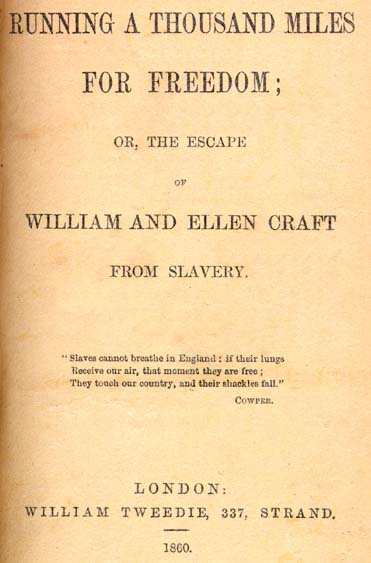
Ellen Craft died in 1891 and, at her request, was buried under her favorite tree on their land. William Craft eventually moved to Charleston, SC, where he died in 1900. The Crafts’ story remains a testimonial to the intelligence, cunning, and courage many African-American slaves brought to their determination to be free.
Read more about the Crafts here.
Watch more about the Crafts’ story here.
With slavery (mostly) ended, people want to abolish the police.
Comments Are Welcome
Note: We moderate submissions in order to create a space for meaningful dialogue, a space where museum visitors – adults and youth –– can exchange informed, thoughtful, and relevant comments that add value to our exhibits.
Racial slurs, personal attacks, obscenity, profanity, and SHOUTING do not meet the above standard. Such comments are posted in the exhibit Hateful Speech. Commercial promotions, impersonations, and incoherent comments likewise fail to meet our goals, so will not be posted. Submissions longer than 120 words will be shortened.
See our full Comments Policy here.
Wonderful article.
The Jews are ceaselessly educating the world and their people of the past present and future plights religeously & rightfully so.
But the black community’s selfhatred appear worst that the race that still dictate their destiny as they linger in the back ground publically but “perfectly” prepares brutal attacks when least expected in lesser public or private encounters of the worst kind.
Those who forget their past are bound to repeat it exponentailly so. How else could Obama speak for Sodomy that spreads AIDS more so in #1 Africa & #2 the West Indies worst than any where else in the world?
Please allow me to stop here God bless your work & please do not expect many responses like this bt believe me you are a blessing!