In a Texas prison, Kwaneta cultivated a menopause support network from scraps of paper
Share
Explore Our Galleries









Breaking News!
Today's news and culture by Black and other reporters in the Black and mainstream media.
Ways to Support ABHM?
Candice Norwood, The 19th
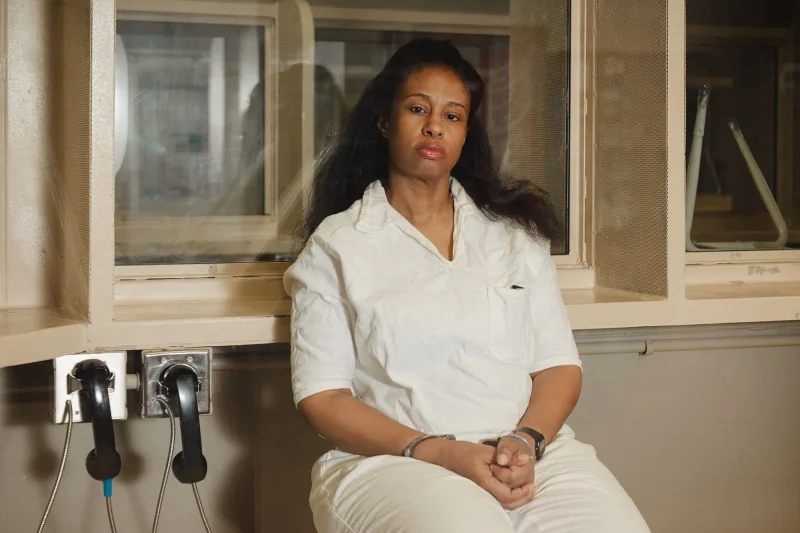
For most of Kwaneta Harris’ life, menopause was not something she heard people talk about.
She didn’t learn about much beyond hot flashes, night sweats and irregular periods in her nursing school training, or at any point during her decade-long career in the medical field. Her mom never passed along tips about that particular stage of life — just as her grandmother never shared any menopause wisdom with her mom.
This legacy of silence meant that Harris’ crash course in menopause came in her late 40s, while she was incarcerated at a Texas state prison. For three years, Harris experienced a litany of confusing ailments: shoulder pain, memory loss, heart palpitations, thinning hair and mood swings.
[…]
Harris finally connected the dots after hearing a neuroscientist explain on NPR that hot flashes, insomnia, memory lapses and anxiety are menopause symptoms, and they start in the brain, not the ovaries. “It was like clicking a puzzle again,” Harris told The 19th in a phone call from prison. “And it was so relieving because I really thought I was losing my mind.”
But when she brought this information to the prison medical staff, a familiar scenario began to play out, one that she characterized as a dismissal of her symptoms and no urgency to respond. She quickly understood that menopause care in prison — like other prison health care — is mired in a lack of resources and timely treatment options.
This reality set Harris on a hunt to find her own solutions, not only for herself but also for the growing population of incarcerated people experiencing menopause. Since 2022, Harris has built community with women in her facility, written articles for national news outlets and advised an organization on bringing menopause education to prisons.
Head over to The 19th to learn more about Harris’ work–and the work yet to be done.
Black women already face a mountain of struggles when dealing with menopause, even when not incarcerated.
Find more news articles about Black women’s health.
Comments Are Welcome
Note: We moderate submissions in order to create a space for meaningful dialogue, a space where museum visitors – adults and youth –– can exchange informed, thoughtful, and relevant comments that add value to our exhibits.
Racial slurs, personal attacks, obscenity, profanity, and SHOUTING do not meet the above standard. Such comments are posted in the exhibit Hateful Speech. Commercial promotions, impersonations, and incoherent comments likewise fail to meet our goals, so will not be posted. Submissions longer than 120 words will be shortened.
See our full Comments Policy here.