Criminally Ill: State Mental Hospitals Are Turning Into Prisons
Share
Explore Our Galleries









Breaking News!
Today's news and culture by Black and other reporters in the Black and mainstream media.
Ways to Support ABHM?
By Sarah Jane Tribble and Doug Livingston, The Marshall Project – Cleveland, Word in Black
The mental health system makes it “easier to criminalize somebody than to get them help.“
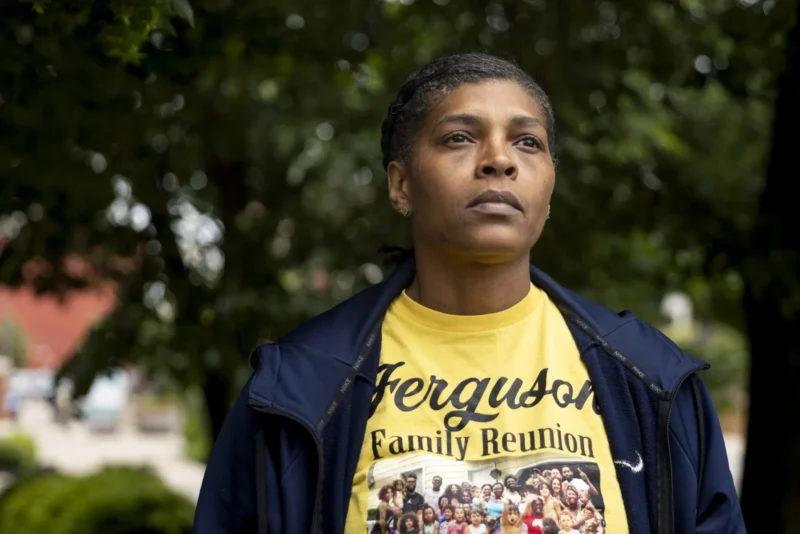
SPRINGFIELD, Ohio — Tyeesha Ferguson fears her 28-year-old son will kill or be killed.
“That’s what I’m trying to avoid,” said Ferguson, who still calls Quincy Jackson III her baby. She remembers a boy who dressed himself in three-piece suits, donated his allowance, and graduated high school at 16 with an academic scholarship and plans to join the military or start a business.
Instead, Ferguson watched as her once bright-eyed, handsome son sank into disheveled psychosis, bouncing between family members’ homes, homeless shelters, jails, clinics, emergency rooms, and Ohio’s regional psychiatric hospitals.
Over the past year, The Marshall Project – Cleveland and KFF Health News interviewed Jackson, other patients and families, current and former state hospital employees, advocates, lawyers, judges, jail administrators, and national behavioral health experts. All echoed Ferguson, who said the mental health system makes it “easier to criminalize somebody than to get them help.”
State psychiatric hospitals nationwide have largely lost the ability to treat patients before their mental health deteriorates and they are charged with crimes. Driving the problem is a meteoric rise in the share of patients with criminal cases who stay significantly longer, generally by court order.
Patients Wait or Are Turned Away
Across the nation, psychiatric hospitals are short-staffed and consistently turn away patients or leave them waiting with few or no treatment options. Those who do receive beds are often sent there by court order after serious criminal offenses.
In Ohio, the share of state hospital patients with criminal charges jumped from about half in 2002 to around 90% today.
The surge has coincided with a steep decline in total state psychiatric hospital patients served, down 50% in Ohio in the past decade, from 6,809 to 3,421, according to the U.S. Substance Abuse and Mental Health Services Administration.
[…]
Statewide, Ohio has about 1,100 beds in its six regional psychiatric hospitals. In May, the median wait time to get a state bed was 37 days.
That’s “a long time to be waiting in jail for a bed without meaningful access to mental health treatment,” said Shanti Silver, a senior research adviser at the national nonprofit Treatment Advocacy Center.
Long waits, often leaving people who need care lingering in jails, have drawn lawsuits in several states, including Kansas, Pennsylvania, and Washington, where a large 2014 class action case forced systemic changes such as expansion of crisis intervention training and residential treatment beds.
Learn more about the increasing crisis.
A Black person in a mental health crisis can also lead to their death.
Comments Are Welcome
Note: We moderate submissions in order to create a space for meaningful dialogue, a space where museum visitors – adults and youth –– can exchange informed, thoughtful, and relevant comments that add value to our exhibits.
Racial slurs, personal attacks, obscenity, profanity, and SHOUTING do not meet the above standard. Such comments are posted in the exhibit Hateful Speech. Commercial promotions, impersonations, and incoherent comments likewise fail to meet our goals, so will not be posted. Submissions longer than 120 words will be shortened.
See our full Comments Policy here.