‘A dog cemetery would not be treated like this’: the fight to preserve Black burial grounds in the US
Share
Explore Our Galleries









Breaking News!
Today's news and culture by Black and other reporters in the Black and mainstream media.
Ways to Support ABHM?
By Melissa Hellmann, The Guardian
In the absence of federal oversight, Black communities band together to stave off development on historic resting places
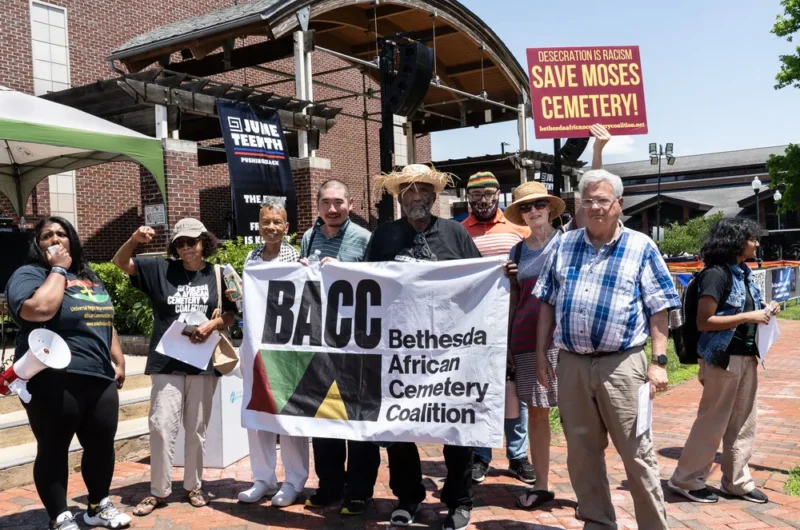
Alarge puddle of water and thickets of weeds cover a vacant lot in Bethesda, Maryland. A towering apartment complex overshadows the cracked asphalt, but Marsha Coleman-Adebayo is most concerned about what – and who – lies beneath.
The nearly two-acre site in the Washington DC suburb covers the historic Moses Macedonia African Cemetery and another burial ground for enslaved people, with the oldest portion dating back to at least the mid-1800s. Hundreds of bones found there may be the remains of enslaved people and their descendants, while more bodies may lie under the parking lot of the Westwood Tower apartment complex.
But like many resting grounds for Black Americans, its preservation is jeopardized by loss of its original community through gentrification and, now, encroaching development. And despite a recent federal law to protect Black cemeteries, they are vulnerable to neglect and eventual destruction.
The original article describes the work of the Bethesda African Cemetery Coalition.
Many enslaved people weren’t given the dignity of burial in a cemetery. More about slavery.
Comments Are Welcome
Note: We moderate submissions in order to create a space for meaningful dialogue, a space where museum visitors – adults and youth –– can exchange informed, thoughtful, and relevant comments that add value to our exhibits.
Racial slurs, personal attacks, obscenity, profanity, and SHOUTING do not meet the above standard. Such comments are posted in the exhibit Hateful Speech. Commercial promotions, impersonations, and incoherent comments likewise fail to meet our goals, so will not be posted. Submissions longer than 120 words will be shortened.
See our full Comments Policy here.